


New guidelines for treating British wildlife
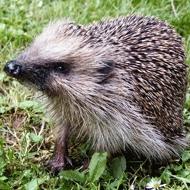
"The BVZS Wildlife Guidelines should ensure all stakeholders involved with wildlife rehabilitation are acting in the best interests of animal welfare."
The British Veterinary Zoological Society (BVZS) has released a set of guidelines on the rescue and rehabilitation of native British wildlife for veterinary surgeons and wildlife professionals.
The guidance clarifies the law in this area and promotes best practice in wildlife rescue centres. It focuses on the treatment and temporary care of injured, diseased and displaced wild animals, and the release of healthy animals to appropriate habitats.
Unlike some other countries, such as Australia, New Zealand and the US, the UK has no regulatory framework governing the treatment and rehabilitation of indigenous wildlife species. Injured or displaced wild animals are instead protected under existing legislation such as the Animal Welfare Act 2006. Wildlife also comes under the Veterinary Surgeons Act 1966.
As a result, the BVZS says the care of wildlife casualties is variable and wildlife centre staff are increasingly coming to the attention of civil authorities and regulators, including the RCVS, police and Veterinary Medicines Directorate.
Facilities, staff and training vary considerably between wildlife centres, as does veterinary input regarding the supply, storage and use of prescription-only medicines (POM-V and POM).
BVZS senior vice president Michael Stanford said: "The BVZS Wildlife Guidelines should ensure all stakeholders involved with wildlife rehabilitation are acting in the best interests of animal welfare, with the added reassurance that they are acting in accordance with UK law."
BVZS believes the guidelines are necessary as all veterinary surgeons in practice are likely to be presented with an injured or orphaned wild animal at some stage. Registered veterinary surgeons and nurses also have a legal as well as ethical responsibility to care for these animals.
Liz Mullineaux, a vet and one of the authors of the guidelines, said: "Working with British wildlife has always been challenging, for both vets and rehabilitators, in terms of what is ethical, legal and of an adequate clinical standard. These Guidelines clarify many of those things, describing best practice and achievable standards for this area of work."
Theresa Amory, chair of the British Wildlife Rehabilitation Council (BWRC), added: "BWRC aims to support and promote the professional integrity of wildlife rehabilitators. While we recognise that meeting all of these Guidelines may be difficult (particularly for smaller scale rehabilitators) we hope that they will enable rehabilitators to work alongside veterinary partners with increased awareness and confidence in their own working policies and procedures."


 Companies marketing medicines for small pets exempt from authorisation must submit their annual return to the Veterinary Medicines Directorate (VMD) by 30 November 2026.



