


Computer 'can spot food poisoning bacteria'
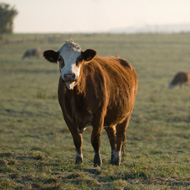
The team predicted less than 10 per cent of the E. coli O157 cattle strains are likely to have the potential to cause human disease.
The most dangerous strains of E. coli O157 could be very rare in cattle, according to new research that used a computer to predict strains of bacteria that are likely to cause food poisoning outbreaks.
Cows are the main reservoir of these toxic bacteria, which are linked to serious human infections. A recent outbreak in Scotland - which is thought to have originated from unpasteurised cheese - led to the death of a child and 19 further cases of serious food poisoning.
As cows are asymptomatic and excrete the bacteria in their faeces, it can be difficult to tell which herds or animals carry strains that are likely to cause disease in humans.
Scientists from the Roslin Institute in Edinburgh trained computer software to compare DNA sequences in E. coli strains isolated from cattle herds and human infections in the UK and US. Once trained, the computer can predict whether a strain has come from a cow or a person.
Using this method, the team predicted less than 10 per cent of the E. coli O157 cattle strains are likely to have the potential to cause human disease.
The findings could help public health officials to reduce the risk of outbreaks in people by targeting interventions, such as vaccination, at herds with risky strains.
Researchers say their approach could be adapted to identify harmful strains of other bacteria such as salmonella and campylobacter.
Roslin's Professor David Gally commented: "Our findings indicate that the most dangerous E. coli O157 strains may in fact be very rare in the cattle reservoir, which is reassuring.
"The study highlights the potential of machine learning approaches for identifying these strains early and prevent outbreaks of this infectious disease.
"We hope that by investigating the genes the software uses to discriminate the strains, we can learn why certain isolates are more of a threat to human health."


 Companies marketing medicines for small pets exempt from authorisation must submit their annual return to the Veterinary Medicines Directorate (VMD) by 30 November 2026.



