


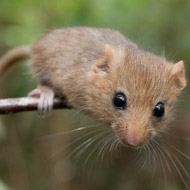
Species threatened by loss of woodland and climate change
The population of hazel dormice has fallen by a third since the year 2000, according to a new report.
Findings published in the State of Britain’s Dormice report also show that since the end of the 19th century, the species has disappeared from 17 English counties.
Compiled by the People’s Trust for Endangered Species (PTES), the figures come from an analysis of data submitted by the National Dormouse Monitoring Programme - the longest-running small, terrestrial mammal monitoring project in the world.
“Dormice have been around for 40 million years, but their future in Britain is now precarious and there’s a pressing need for action to ensure their long-term survival," said Ian White, dormouse officer at PTES. “Protecting dormice is a priority for PTES: along with the support of hundreds of volunteers, we are trying to save them before its too late.”
Dormice were once widespread throughout England and Wales but are now vulnerable to extinction due to loss of woodland, changes to farming practices, and climate change.
In a press release, PTES details their plan to reverse the decline which includes recording dormice, providing training and guidance for landowners, as well as a reintroduction programme.
Since 2003, as part of Natural England’s Species Recovery Programme, PTES has managed 26 dormouse reintroductions at 22 sites in 12 counties. Twenty-one of these reintroductions have shown indications of success, such as breeding or dispersal to new areas beyond the release site, they write.
“The hazel dormouse is just one animal that’s been helped by Natural England’s Species Recovery Programme,” said Natural England’s chief scientist Dr Tim Hill. “We’ve worked closely with PTES and others for 23 years to fund and support dormouse conservation and, while there is clearly more work to do, we’re very encouraged to see dormice thriving in those areas where they’ve been reintroduced.”
Image (C) Clare Pengelly


 Companies marketing medicines for small pets exempt from authorisation must submit their annual return to the Veterinary Medicines Directorate (VMD) by 30 November 2026.



