
Your data on MRCVSonline
The nature of the services provided by Vision Media means that we might obtain certain information about you.
Please read our Data Protection and Privacy Policy for details.

In addition, (with your consent) some parts of our website may store a 'cookie' in your browser for the purposes of
functionality or performance monitoring.
Click here to manage your settings.
If you would like to forward this story on to a friend, simply fill in the form below and click send.

Your friend's email:
Your email:
Your name:
 
 
Send Cancel

Helpful pesticides ‘harmful to bees,’ study concludes
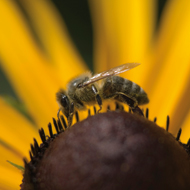
Honeybee
Bees treated with chlorothalonil showed the greatest change in gut microbiome.
Scientists study impact on gut health

Pesticides used to improve the health of honeybees could be damaging the bacteria in their guts, according to new research.

Findings published in the journal Frontiers in Microbiology show that alterations can affect the gut’s ability to metabolise sugars and peptides.

The discovery is a concern for scientists, as these processes are vital for honeybee health.

“Although helpful for ridding hives of parasites and pathogens, the chemicals in beekeeper-applied pesticides can be harmful to the bees,” said lead author Mark Williams, an associate professor of horticulture at Virginia Tech University.

“Our research suggests that pesticides could specifically impact the microbes that are crucial to honeybee nutrition and health.”

In the study, the team observed honeybees that lived in hives treated with pesticides and compared them with those that did not.

Bees treated with chlorothalonil showed the greatest change in gut microbiome, said Williams.

The team now aim to learn how specific changes in gut microbiota affect the survival of honeybees.


Become a member or log in to add this story to your CPD history

Voting opens for BEVA Council

News Story 1
 Eligible members of BEVA will be able to vote for their Council team until Monday, 17 August 2026. Members will have received an election email on 17 July.

There are five candidates standing for four available places on Council. They are:

  • Alexandre Triguino
  • Angela Jones
  • Beth Bryant
  • Holly Rees
  • Hugh Somerville
Full profiles for each candidate can be found on the BEVA website

Click here for more...
News Shorts
Government releases latest bluetongue statistics

APHA has confirmed the number of bluetongue cases that have been logged in the UK since 1 July 2026.

The total number of BTV-3 cases, as of 6 August, is 187. This includes 183 cases in England and four cases in Wales.

There have been no recorded cases in Scotland and Northern Ireland.

The location of premises in Great Britain where at least one animal has tested positive by PCR for BTV-3, BTV-8 or BTV-12 is available on the bluetongue case map. All livestock keepers in Great Britain are urged to familiarise themselves with nation-specific bluetongue control policies.

Bluetongue virus is a notifiable disease. It is a legal requirement that any suspicions, even if livestock has been vaccinated, are reported immediately.

