


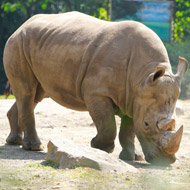
Study calls for international action to save ‘megafauna’
International conservation biologists and experts from The University of Nottingham Malaysia Campus (UNMC) have called for a worldwide strategy to prevent the extinction of the world’s largest mammals.
In the paper ‘Saving the World’s Terrestrial Megafauna’ published in BioScience journal, 40 conservation experts cited illegal hunting, deforestation, habitat loss, growing human populations and expanding agriculture and livestock areas as catalysts for mass extinction.
Lead author Dr William Ripple, professor of ecology at Oregon State University said: “The more I look at the trends facing the world’s largest terrestrial mammals, the more concerned I am we could lose these animals, just as science is discovering how important they are to ecosystems and to the services they provide for people.”
The UNMC in collaboration with the Management and Ecology of Malaysian Elephants (MEME) have been particularly studying large animal population in Southeast Asia, where the situation is especially dire.
Dr Campos-Arciez, principal investigator of MEME said: “In the past few decades we have lost animals like the Kouprey, a large wild cattle from Indochina; the populations of Sumatran and Javan rhinoceros are so small now that they are unlikely to survive beyond the 21st Century.”
With almost 60 per cent of the world’s largest mammalian carnivores and herbivores now listed as threatened for extinction International Union for Conservation of Nature’s Red List of Threatened Species, the study calls for a global infrastructure for megafauna conservation.
The paper has been translated into Malay and Thai to increase awareness in the region where the team is continuing to work.


 Companies marketing medicines for small pets exempt from authorisation must submit their annual return to the Veterinary Medicines Directorate (VMD) by 30 November 2026.



