


Green monkeys 'acquired S. aureus from humans'
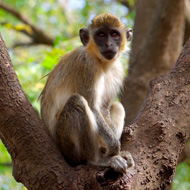
Transmission is believed to have occurred as a result of bacteria being transferred from human hands to food that was then given to monkeys.
Scientists have discovered that green monkeys in The Gambia acquired Staphylococcus aureus from humans on numerous occasions, dating back as far as 2,700 years.
Strains of S. aureus were isolated from the noses of healthy monkeys and compared with those isolated from humans in similar locations.
Co-author Mark Pallen from Warwick Medical School said the team used a technique known as high-throughput sequencing, which showed the monkeys "had acquired S. aureus strains from humans on multiple occasions."
The majority of S. aureus found in monkeys were part of a group with common ancestors, which appear to have been transmitted from humans 2,700 years ago. Two of the most recent transmission events are thought to have taken place three decades ago and seven years ago.
Transmission is believed to have occurred as a result of bacteria being transferred from human hands to food that was then given to monkeys.
Co-author Dr Martin Antonio from the Medical Research Council Unit, Banjul, who led the work in The Gambia, explained: "Although wild, these monkeys are accustomed to humans, who often feed them peanuts."
Over the past few generations, rising levels of human intrusion in wild ecosystems, coupled with increasing travel, has led to the acquisition and spread of diseases including HIV and Lyme disease.
Prof Pallen concluded: "As humans encroach ever more steadily into natural ecosystems, the risk increases that pathogens will be transmitted from humans to animals, or vice versa."


 Companies marketing medicines for small pets exempt from authorisation must submit their annual return to the Veterinary Medicines Directorate (VMD) by 30 November 2026.



