


Proposal moving to Kielder Forest and Borders area
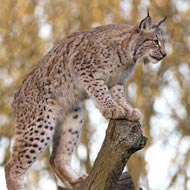
Northumberland and the Scottish Borders have been announced as the ‘preferred’ locations for a trial reintroduction of Lynx to the British Isles.
The Lynx UK Trust are currently engaged in research to identify potential release sites, as well as carrying out consultations on the reintroduction of these cats to the UK.
On Monday (25 July), the organisation revealed that the proposal for the reintroduction was moving to the Kielder Forest and Borders area. Consultations will now begin in the region with stakeholders organisations and the local community.
Lynx UK Trust believe that the area is an ideal candidate for the reintroduction efforts because of its limited road networks and low human population density. It is also the largest area of continuous forest largely contained from sheep farming.
The local consultation is expected to last a few months, after which the Trust will apply to Natural England and Scottish Natural Heritage for a licence.
"This is by no means a final decision or a foregone conclusion,” said Dr Paul O'Donoghue, Chief Scientific Advisor for the Trust. “We're very interested in what everyone in this region has to say about the idea. They could be living and working alongside the lynx in the near future, which really is an unprecedented opportunity in the history of UK wildlife reintroductions.”
The Eurasian Lynx has been extinct in the UK for over 1,300 years, but the Lynx UK Trust believes it will help control deer populations and reduce damage to forests. Opponents, however, fear that the reintroduction could pose a threat to British livestock.
In a statement, Phil Stocker, NSA chief executive said: “We are dismayed that Lynx UK Trust is still pursuing plans to release lynx, as we do not share their belief that the UK has any suitable locations. We are too small an island and too densely populated.”
NSA’s concerns about the reintroduction were recently detailed in a report on The wider consequences of the introduction of Eurasian lynx to the UK.


 Companies marketing medicines for small pets exempt from authorisation must submit their annual return to the Veterinary Medicines Directorate (VMD) by 30 November 2026.



