


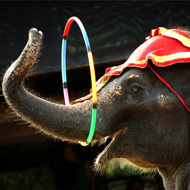
BVA urges Welsh government to set an example
Leading animal welfare scientists have concluded that ‘captive wild animals in circuses and other travelling animals shows do not achieve their optimal welfare requirements.’
Commissioned by the Welsh government, ‘The Welfare of Wild Animals in Travelling Circuses’ review was conducted to see if a ban could be introduced under the Animal Welfare Act 2006.
In it, the authors conclude that the evidence “would therefore support a ban on using wild animals in travelling circuses and mobile zoos on animal welfare grounds.”
Welcoming the news, the Born Free Foundation said the report gives the Welsh government ‘a strong basis upon which to move forward with a ban as soon as possible’.
“We believe that there is sufficient political appetite to move forward immediately with a ban on wild animals in circuses and this should be pursued as a matter of priority,” said Chris Draper, programmes manager for the Born Free Foundation.
“We would fully support any move made by the Welsh Government to deal with the growing welfare issues associated with mobile zoos, but believe that the circus ban can be expedited as soon as possible as an independent initiative.”
The Welsh branch of the BVA also responded to the report, saying it provides ‘robust evidence’ that circus animals ‘do not have a life worth living’.
Branch President Neil Paton said: "We continue to urge the Welsh government to set an example for the rest of the UK governments to follow, and ban wild animals being kept and used in travelling circuses.”
The review was carried out by Stephen Harris, professor of environmental sciences at Bristol University. As well as consulting with over 650 experts and organisations, Mr Harris also considered more than 1,400 pieces of literature.


 Companies marketing medicines for small pets exempt from authorisation must submit their annual return to the Veterinary Medicines Directorate (VMD) by 30 November 2026.



