


Calls for replacement of animals in antibody production
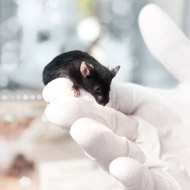
The latest UK stats on animal use in scientific experiments show 9,500 animals were used for antibody production in 2013.
Scientists studying the production of antibodies say millions of animals are still being used in routine scientific procedures when there is a tried and tested alternative.
Writing in the Cell Press journal Trends in Biotechnology, the international group of scientists said an animal friendly technique for antibody production that uses bacteriophage viruses rather than live animals, is being overlooked. Yet they believe it has enormous potential to reduce animal use.
Dr Alison Gray, a visiting researcher at the University of Nottingham, explained: "The antibody-based tests that are commonly used in society appear to be far removed from animal experimentation since no animals were directly tested on.
"However, the target molecule to be detected is repeatedly injected into the animal, initiating an immune response. Months later, the animal is euthanased and antibodies to that molecule are extracted and incorporated into an in vitro, 'animal-free' test. So in reality, we are not replacing animals but substituting methods."
It should be the ultimate aim of scientists in this field to replace the use of animals in research and industry, she added, but there is a lack of awareness about this technology.
"The 20 year old advanced technology called ‘phage display’ which uses bacteriophage viruses to produce monoclonal and polyclonal antibodies is available and cost-effective and can replace a huge number of animals. In fact this technology has grown to a level of scientific sophistication that outweighs obsolete and outdated animal immunisation protocols."
The latest UK stats on animal use in scientific experiments show 9,500 animals were used for antibody production in 2013, but as the reporting techniques in subsequent reports are different, Dr Gray says we cannot know how many animals have been used in more recent years.
Dr Andrew Bennett, director of the Fund for the Replacement of Animals in Medical Experiments (FRAME) laboratory, commented on the research.
"The paper by Dr Gray and her colleagues highlights the unusual situation in terms of antibody production. Antibodies can be made without using animals and the technology is both accessible and robust; yet thousands of animals are killed each year in commercial antibody production."
Aside from the unnecessary use of animals, there is also another issue - the quality of antibodies raised in animals for scientific research. Dr Bennett said a "substantial proportion" of these either perform poorly or do not work. He added: "Phage display technology has the potential to produce more specific and better functioning antibodies than traditional animal based methods. FRAME will be working with and supporting Dr Gray in order to promote the use of phage display technology in the future."
Scientists from the universities of Nottingham, Toronto, Utrecht and Lund in Sweden are proposing a seven-point, EU-led plan to tackle the issue.


 Companies marketing medicines for small pets exempt from authorisation must submit their annual return to the Veterinary Medicines Directorate (VMD) by 30 November 2026.



