


Tiny ‘dancing’ hairs alert bees to floral electric fields
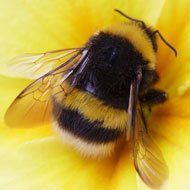
Tiny hairs on the bee's body 'dance’ in response to the electric field, alerting the nervous system.
Researchers at the University of Bristol have revealed how bees are able to sense and interpret signals that are transmitted by flowers.
A study published in Proceedings of National Academy of Sciences shows that tiny hairs 'dance’ in response to the flower's electric field, which in turn alerts the bee’s nervous system.
The researchers say that this ‘electroreception’ could arise from the bee’s hairs being lightweight and stiff, and believe that it could be present in many other insects.
“We were excited to learn that bees’ tiny hairs dance in response to electric fields, like when humans hold a balloon to their hair,” commented study leader Dr Sutton.
“A lot of insects have similar body hairs, which leads to the possibility that many members of the insect world may be equally sensitive to small electric fields.”
Electroreception has been observed almost exclusively in sea mammals since salt-water is a better conductor than air. Sharks, for example, are equipped with sensitive jelly-filled receptors that detect fluctuations in electric fields in seawater which helps them to locate prey.
Scientists are especially keen to learn how signals transmitted by flowers are perceived, received and acted upon by bees as they are critical to crop pollination.


 Companies marketing medicines for small pets exempt from authorisation must submit their annual return to the Veterinary Medicines Directorate (VMD) by 30 November 2026.



