


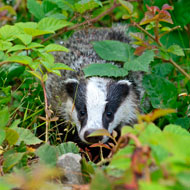
Public worried about risks to health and safety
As the Government gets ready to expand the badger cull to new areas of the country, new figures show widespread public concern about risks to public safety and negative impacts on business.
As part of the badger control licence application process, Natural England invited members of the public to provide information on issues that may be relevant to the determination of the licence application.
The public consultation garnered almost 1000 responses to the 29 applications for badger control licences across nine counties in England. These include Cheshire, Cornwall, Devon, Dorset, Gloucestershire, Herefordshire, Somerset, Wiltshire and Worcestershire.
A total of 661 responses raised a general concern that they believed a licence could have a negative impact on businesses in the county as a result of people avoiding the area.
Some 386 responses raised concerns about the risks to public health and safety. Respondents professed their concerns about safety when walking out on public footpaths, dog walking at night, horse riding, wildlife watching and camping when shooting is taking place.
Other general concerns raised by respondents included tourism (157 responses), vaccination (116 responses) and ecological concerns (192 responses).
The Humane Society International/UK wants to see the badger cull abandoned in favour of farm-based measures to tackle bovine TB. Commenting on the figures, executive director Claire Bass said: “The public’s overwhelming negative response to expanding the badger cull across nine English counties should be a major wake-up call to the government.
“Shooting badgers to control TB in cattle has been roundly condemned as cruel and pointless by virtually every wildlife and conservation expert qualified to comment.
“Local residents know that it’s a PR nightmare that will damage local economies, including tourism, and many have serious legitimate concerns over the public safety of license-holders running around the countryside in the dark with shotguns, taking pot shots at badgers. People don’t want this disastrous cull in their backyards, the government clearly has no public mandate to continue or expand it.”
The badger control licenses for 2016 are yet to be issued, but culling is expected to continue for the fourth year in Gloucestershire and Somerset, and for the second year in Dorset.


 Companies marketing medicines for small pets exempt from authorisation must submit their annual return to the Veterinary Medicines Directorate (VMD) by 30 November 2026.



