


VMD issues advice on babesiosis treatment
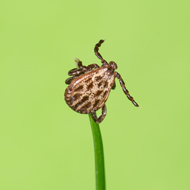
Babesiosis was recently confirmed in Essex in four dogs with no history of foreign travel.
In light of recent outbreaks of babesiosis in UK dogs, the Veterinary Medicines Directorate (VMD) has published a statement on the availability of treatments.
Babesiosis was recently confirmed in Essex in four dogs with no history of foreign travel. A tick survey in the area the dogs were walked has since revealed the presence of infected D reticulatus ticks.
There is currently no veterinary medicinal product (VMP) that is authorised in the UK for the treatment of babesiosis in dogs. Treatments must, therefore, be prescribed in accordance with the cascade. The use of a VMP authorised for use in a different species may be required. Alternatively, an EU authorised treatment for babesiosis in dogs may be imported.
The VMD says: 'Under the provisions of the cascade, vets may choose to use Imizol 85mg/ml solution for injection (active substance imidocarb), by Intervet, which is authorised in the UK for the treatment and prevention of bovine babesiosis (Babesia divergens).
'If, based on the the vets' professional judgement, this treatment is not suitable for a particular patient, then an alternative VMP can be imported instead.
'Products exist across the EU which vets may apply to import through the special import scheme. These include (but may not be limited to) imidocarb containing products similar to Imizol such Carbesia (MAH include MSD Animal health), which has dogs as a target species and includes dosing information for dogs.'
For queries related to importation, email importcert@vmd.defra.gsi.gov.uk and quote 'treatment for babesiosis in dogs' in the subject line.


 Eligible members of BEVA will be able to vote for their Council team until Monday, 17 August 2026. Members will have received an election email on 17 July.



