
Your data on MRCVSonline
The nature of the services provided by Vision Media means that we might obtain certain information about you.
Please read our Data Protection and Privacy Policy for details.

In addition, (with your consent) some parts of our website may store a 'cookie' in your browser for the purposes of
functionality or performance monitoring.
Click here to manage your settings.
If you would like to forward this story on to a friend, simply fill in the form below and click send.

Your friend's email:
Your email:
Your name:
 
 
Send Cancel

Councils may be able to ban live animal exports
sheep
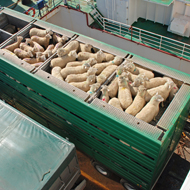
"When local people own ports, like in Ramsgate, they ought to be able to ban the exportation of live animals for slaughter." (stock photo)

Ramsgate disaster prompts MP to introduce a bill
 
Councils may be given the power to ban live animal exports from ports they own, after Craig Mackinlay MP introduced a bill in the House of Commons on Tuesday (10 May).

Mr Mackinlay, MP for South Thanet, spoke of the tragic events at the Port of Ramsgate in September 2012, where dozens of sheep died or were euthanised.

When the AHVLA (now APHA) inspected the vehicle, they found it had been poorly loaded and overstocked. One sheep had a broken leg and many more were lame or had trapped limbs. Six lambs fell into the water when the floor collapsed, of which two died and four were rescued by the RSPCA.

Following the case, Thanet District Council suspended further shipments for a period of time, but was later found to have breached an 1847 law and ordered to pay compensation of more than £4 million.

"This ruling means that local people are powerless to end a practice that many find barbaric - councils cannot turn away live exports," Mr Mackinlay said.

"I think it's right that local people have a say in animal welfare standards in their area. When local people own ports, like in Ramsgate, they ought to be able to ban the exportation of live animals for slaughter, a practice many find barbaric."

During the 10 minute rule bill, however, Andrew Nuttall MP spoke against the proposal, saying that while the UK remains part of the EU, parliament is "powerless" to change the legislation in the manner proposed.

Nonetheless, a majority of MPs voted to bring the bill forward, allowing it to progress to the next stage.

 

Become a member or log in to add this story to your CPD history

Equine Disease Surveillance report released for Q4 2025

News Story 1
 The latest Equine Disease Surveillance report has been released, with details on equine disease from Q4 of 2025.

The report, produced by Equine Infectious Disease Surveillance, includes advice on rule changes for equine influenza vaccination.

Statistics and maps detail recent outbreaks of equine herpes virus, equine influenza, equine strangles and equine grass sickness. A series of laboratory reports provides data on virology, bacteriology, parasitology and toxicosis.

This issue also features a case study of orthoflavivus-associated neurological disease in a horse in the UK. 

Click here for more...
News Shorts
RCVS annual renewal fee for vets due

RCVS' annual renewal fee for veterinary surgeons is now due. Vets must pay their renewal fee before Wednesday, 1 April 2026.

This year's standard annual fee has increased to 431 from last year's 418. This is an approximately three per cent increase, as approved by RCVS Council and the Privy Council.

Tshidi Gardner, RCVS treasurer, said: "The small fee increase will be used to help deliver both our everyday activities and our new ambitious Strategic Plan, which includes aims such as achieving new legislation, reviewing the Codes of Professional Conduct and supporting guidance, and continuing to support the professions through activities such as the Mind Matters Initiative, RCVS Academy and career development."

A full breakdown of the new fees is on the RCVS website. Information about tax relief is available on the UK government website.

