


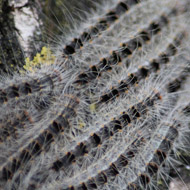
Oak processionary moth caterpillar hairs can cause skin irritations
Vets in and around London are being urged to remain vigilant of a species of caterpillar which can cause skin irritations and breathing difficulties.
In a letter to Veterinary Record (Vol 178, No 18), Andrew Hoppit from the Oak Processionary Moth Project reminds readers of the risk to animals from the hairs of the caterpillar.
Native to southern Europe, the oak processionary moth is an exotic pest which was accidentally introduced to London 11 years ago.
The hairs of the caterpillar contain an irritating substance called thaumetopein, which can cause itching skin rashes, eye irritation, and occasionally breathing difficulties in animals and people who come into contact with them.
‘We recently received our first report of a dog requiring veterinary treatment after coming into contact with the hairs of the caterpillars,’ writes Mr Hoppit.
‘The dog had picked up an old caterpillar nest which had fallen to the ground and which contained hairs shed by its previous occupants. We also had a report of horses developing skin irritations last year,’ he added.
Mr Hoppit warns that other animals are also at risk from passive exposure, such as eating or lying on grass on which hairs have fallen, or hairs blown by the wind. Some animals may also attempt to lick, sniff or bite caterpillars or their nests.
‘The main risk period is April to July, when the caterpillars are active before erupting into adult moths,” said Mr. Hoppit.
A programme to control the spread and impact of this exotic pest is being led by The Forestry Commission. Further information about the species, with maps indicating the known affected areas can be found at http://www.forestry.gov.uk/opm
Image (C) Kleuske


 Companies marketing medicines for small pets exempt from authorisation must submit their annual return to the Veterinary Medicines Directorate (VMD) by 30 November 2026.



