


'Significant potential' for new swine flu strains
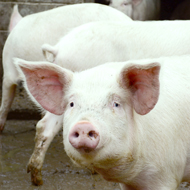
Regular outbreaks of influenza A viruses are seen in humans and pigs - most commonly H1 and H3 subtypes.
Scientists say there is 'significant potential' for the emergence of new swine flu strains, due to the wide diversity of flu in pigs across multiple continents. These strains present a serious threat to public health, as they are no longer similar enough to current human flu strains for our immune systems to recognise them.
When flu viruses are transmitted from humans to pigs, they continue to evolve their surface proteins (or antigens), explained lead author Nicola Lewis from the University of Cambridge. This results in a large diversity of novel flu viruses, which can then be transmitted to pigs and humans.
Regular outbreaks of influenza A viruses are seen in humans and pigs - most commonly H1 and H3 subtypes. But there is a lack of data on the diversity of their antigens, which shapes their pandemic potential.
Dr Lewis and her team say they have created the largest and most geographically comprehensive dataset of antigenic variation. It encompasses nearly 600 flu viruses from 1930-2013, covering multiple continents including Europe, the US and Asia. Nearly 200 of the viruses had never been studied before.
Findings published in the journal eLife suggest the amount of variation in swine flu viruses is similar to that in H1 and H3 viruses seen in humans for the past 40 years. This has been driven by the frequent transmission of human viruses to pigs.
Dr Lewis commented: "Since most of the current swine flu viruses are the result of human seasonal flu virus introductions into pigs, we anticipate at least some cross-protective immunity in the human population, which could potentially interfere with a re-introduction of these viruses."
Lineages of human H1 and H3 viruses that were introduced earlier, however, pose the greatest risk to humans, Dr Lewis added. This is down to the low or negligible levels of cross-immunity predicted in people born since the 1970s.
Control strategies for swine flu vary by region. In the US, vaccination is used extensively to control flu in pigs, while some countries do not use vaccines at all and others produce herd-specific vaccines for individual producers. Co-author Colin Russell said the significant antigenic diversity seen in the data suggests it is "highly unlikely" that one vaccine strain per subtype would be effective globally, or even in a given region.
Researchers say their findings highlight the need for more focused surveillance in areas with high pig population density, such as China, as well as situations where pigs and humans are in close contact.


 Companies marketing medicines for small pets exempt from authorisation must submit their annual return to the Veterinary Medicines Directorate (VMD) by 30 November 2026.



