


Pilot ban on horse tethering recommended
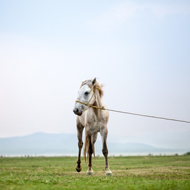
The charity, Friends of Swansea Horses (FOSH), said tethering comes with serious welfare concerns.
A pilot scheme should be introduced to ban horse tethering on public land in one part of Swansea, a working group has said. The recommendation follows serious concerns about horse welfare in the area.
If successful, the scheme could be rolled out across Swansea.
In a letter to cabinet members, the Tethered Horses Scrutiny Working Group wrote: 'The suffering of many horses kept on tethers on council land is not acceptable. We heard enough examples of neglect and cruelty to convince us that the current situation cannot be allowed to continue and that something needs to be done'.
Evidence submitted by animal charities, the police and Trading Standards showed strong arguments both for and against the implementation of a ban. The charity, Friends of Swansea Horses (FOSH), said tethering comes with serious welfare concerns, as well as loss of public amenity, community conflicts and a poor public image for Swansea. The council currently spends a significant amount of money dealing with neglect and cruelty by impounding the affected horses.
However, some were concerned that a ban may not be practical or affordable. A Trading Standards officer said there are too many horses to implement a zero tolerance approach across the city and county. With the council facing serious financial challenges, cost implications cannot be taken lightly, the working group wrote.
Another worry is what will happen to horses that are impounded if a ban is introduced. Their fate is currently unclear but it is thought that many would need to be euthanised.
The Community Horse and Pony Scheme (CHAPS) felt a ban would be counterproductive for welfare and could lead to horses being kept in unsuitable stables such as garden sheds, meaning those that are mistreated would become invisible. Due to the low cost of purchasing a horse, owners can easily replace horses that have been impounded.
What the organisations are agreed on, however, is that the current situation cannot continue. Due to the potential risks and costs, the working group is recommending a pilot in just one area of Swansea, incorporating both education and enforcement.
While the issue is 'complex and challenging' and there are 'no easy answers', the working group have recommended a joint approach of enforcement and education. This includes communicating and engaging with members of the public, liaising with rescue and rehoming organisations, education and support for responsible owners and the use of council land for regulated grazing.
A response from the cabinet is expected by 11 May.
For more information on the group's recommendations, visit: http://www.swansea.gov.uk/article/25363/Tethered-Horses-Working-Group-Letter-to-Cabinet-member-20-April-2016


 Companies marketing medicines for small pets exempt from authorisation must submit their annual return to the Veterinary Medicines Directorate (VMD) by 30 November 2026.



