


Nottingham to lead the way in dairy research
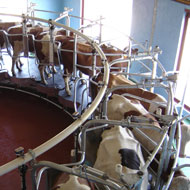
Facilities at the centre will include a unique dairy unit that will be equipped with a flexible interior.
A new state-of-the-art centre that aims to lead the way in dairy research is to be created at The University of Nottingham.
Funded by the government, the Centre of Innovation in Livestock (CIEL) will provide a direct link between science and practice to enable the livestock sector to become more innovative.
Facilities at the centre will include a unique dairy unit that will be equipped with a flexible interior to allow rearrangement of floors, bedding, loafing and feeding facilities.
Research at the unit will focus on interactions between factors such as environment, physiology, breed and welfare.
“The University of Nottingham is delighted to be taking part in this important project. We have a team of dedicated academics with a wealth of experience in livestock research at Nottingham,” said project leader Martin Green.
"We are all looking forward to working closely with colleagues in industry and academia, in order to find innovative new solutions to the issues facing livestock producers and food manufacturers.”
Livestock researchers will use the centre to examine adaption of the housed environment to enable the development of optimum housing design.
Other facilities in development include a cutting edge nutritional research facility for 100 high yielding milk cows.
Cows will be individually fed with continuous recordings being made of feed intake, milk yield weight and activity, linked to detailed measurements of cow metabolism and physiology.
Furthermore, an associated laboratory facility will carry our research into host pathogen interactions, mammary gland biology, vaccine development and other milking and mastitis related issues.
The centre will be one of 12 specialist research institutes based across the UK, which together will comprise the national CIEL initiative.
“We have a tremendous depth of expertise in agricultural research and innovation here at Nottingham,” said Dr George Baxter, director of business engagement and innovation services at The University of Nottingham.
“We are very pleased to have been selected to play such a key role in the CIEL, and are excited at the prospect of forging new relationships with all of the businesses involved in the project.”
CIEL is part of the government’s Centres for Agricultural Innovation initiative - a new collaborative model between the agri-tech sector and the government. To find out more, visit www.cielivestock.co.uk.


 Companies marketing medicines for small pets exempt from authorisation must submit their annual return to the Veterinary Medicines Directorate (VMD) by 30 November 2026.



