


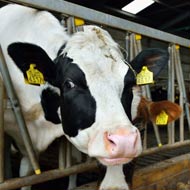
Measures form part of government eradication programme
A package of new measures have come into force in England this week as part of the government's plan to eradicate bovine TB by 2019.
As of 6 April, farmers in the Low Risk Area of England must arrange post-movement testing of cattle coming from the rest of England and Wales. This step aims to ensure the area can become and remain officially TB free, as more than 50 per cent of new TB infections in the Low Risk Area have a clear link with cattle from higher risk areas.
Tighter movement controls also came into force in the High Risk Area, meaning herds affected by a new TB breakdown must pass two tests before movement restrictions can be lifted.
Regardless of post-mortem or lab culture results, they must undergo two consecutive short interval herd tests with negative results, read under 'severe interpretation' - a more rigorous interpretation of the tuberculin skin test.
Defra says the high TB recurrence rate and limited sensitivity of the skin test suggest that, in some cases, restrictions may have been lifted too early when there are still infected animals in the herd.
Other measures being introduced are government-funded pre-sale testing, which will be available to many herd owners in the Low Risk Area selling 20 or more cattle in a single purchase.
The Animal and Plant Health Agency (APHA) is also now offering the option of a private interferon gamma blood test to diagnose TB under certain conditions.
For more information on this, farmers and private vets are advised to contact their regional APHA office: https://www.gov.uk/government/organisations/animal-and-plant-health-agency/about/access-and-opening


 Companies marketing medicines for small pets exempt from authorisation must submit their annual return to the Veterinary Medicines Directorate (VMD) by 30 November 2026.



