
Your data on MRCVSonline
The nature of the services provided by Vision Media means that we might obtain certain information about you.
Please read our Data Protection and Privacy Policy for details.

In addition, (with your consent) some parts of our website may store a 'cookie' in your browser for the purposes of
functionality or performance monitoring.
Click here to manage your settings.
If you would like to forward this story on to a friend, simply fill in the form below and click send.

Your friend's email:
Your email:
Your name:
 
 
Send Cancel

Police force considers feline crime fighters
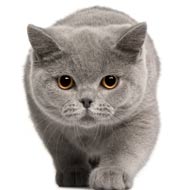
Cat on the prowl
Moggies on patrol: Durham Police could soon be the first constabulary in the UK to introduce police cats.

Durham constabulary looks into recruiting the UK’s first police cat

Durham Police could soon be the first constabulary in the UK to introduce police cats, following a little girl’s letter to the chief constable asking why there are no felines on patrol.

Five-year-old Eliza Damson-Hopper wrote to Durham Police chief Mike Barton suggesting the police should use cats as well as dogs to fight crime.

She received a reply saying he would ask his inspector who is in charge of police dogs ‘to think about the idea’.

The force has since confirmed that it will consider using cats in a not-yet-specified role.

Inspector Richie Allen, of the dog support unit, told BBC News: "I can confirm the force is looking into recruiting what we believe to be the first UK police cat.

"Their duties and responsibilities have not yet been agreed but if nothing else they will become the force mascot. Of course, if it smells a rat we'll expect it to catch it."

Eliza owns a cat called Mittens and a dog called Susie. Together with her mother, Cheryl Damson from Country Durham, she typed out a letter to the chief constable.

It read: “A police cat would be good as they have good ears and can listen out for danger. Cats are good at finding
their way home and could show policemen the way. Cats are good at climbing trees and hunting and could rescue people that are stuck.”

Mr Barton replied saying that he always liked cats and drew a picture of his cat Joey on the back of the letter. 

Become a member or log in to add this story to your CPD history

Equine Disease Surveillance report released for Q4 2025

News Story 1
 The latest Equine Disease Surveillance report has been released, with details on equine disease from Q4 of 2025.

The report, produced by Equine Infectious Disease Surveillance, includes advice on rule changes for equine influenza vaccination.

Statistics and maps detail recent outbreaks of equine herpes virus, equine influenza, equine strangles and equine grass sickness. A series of laboratory reports provides data on virology, bacteriology, parasitology and toxicosis.

This issue also features a case study of orthoflavivus-associated neurological disease in a horse in the UK. 

Click here for more...
News Shorts
RCVS annual renewal fee for vets due

RCVS' annual renewal fee for veterinary surgeons is now due. Vets must pay their renewal fee before Wednesday, 1 April 2026.

This year's standard annual fee has increased to 431 from last year's 418. This is an approximately three per cent increase, as approved by RCVS Council and the Privy Council.

Tshidi Gardner, RCVS treasurer, said: "The small fee increase will be used to help deliver both our everyday activities and our new ambitious Strategic Plan, which includes aims such as achieving new legislation, reviewing the Codes of Professional Conduct and supporting guidance, and continuing to support the professions through activities such as the Mind Matters Initiative, RCVS Academy and career development."

A full breakdown of the new fees is on the RCVS website. Information about tax relief is available on the UK government website.

