


Study finds similar, large-scale impact in Europe and US
Common bird populations are being affected by climate change in Europe and the US, a team of international scientists has found.
Using data spanning a 30-year period, the team was able to show, for the first time, that climate is having a similar, large-scale impact on the abundance of birds in widely separated parts of the world.
Climate records from 1980-2010 were used to divide the species into two groups - those expected to benefit from climate change, and those expected to suffer.
The study encompasses 145 bird species in Europe and 380 in the US. Findings published in the journal Science show that those predicted to do well significantly outperformed those predicted to do badly.
Co-lead author Dr Stephen Willis explained: "If there was no impact of climate change, you would expect the average population trend of species in the two groups to be the same, but the differences expose the fact that recent climate change has already favoured one set of species over another."
Differences in population trends can also be seen in birds of the same species, residing in different geographical areas. For example, wren populations are rising in northern Europe where winters are getting milder, but falling in some southern countries where summers are getting hotter and drier.
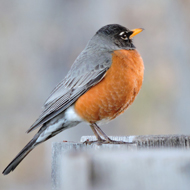
American robins have declined in some southern states such as Mississippi and Louisiana, but inclined in north-central states such as the Dakotas.
Similarly the Dartford warbler has seen an eight-fold increase in numbers in the UK since the early '80s. But its numbers are falling in Spain, which is consistent with the changing climate.
Joint lead author Dr Stephen Willis, said: "These findings represent a new climate impact indicator for biodiversity. The same approach could be applied to species such as bees, butterflies and dragonflies, which are well monitored and highly susceptible to changes in climate.
"This helps us to understand where climate change is affecting populations, and to understand the causes of population changes of common birds that might also be affected by factors such as habitat loss and agricultural intensification."
Researchers hope their work could lead to expanded bird monitoring in tropical or sub-tropical regions and the northern hemisphere, where monitoring has previously taken place in fewer areas and for shorter periods.


 Companies marketing medicines for small pets exempt from authorisation must submit their annual return to the Veterinary Medicines Directorate (VMD) by 30 November 2026.



