


Study sheds light on evolution of human malaria
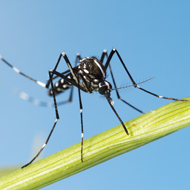
The findings give new perspective on the mosquito-borne disease which threatens half the world’s population.
A study of chimpanzee parasites offers new insights into how the most malignant human malaria parasite first came to infect people.
Published in Nature Communications, the study shows that the source of malaria made the leap from apes to humans relatively recently.
The findings give new perspective on the mosquito-borne disease which threatens half the world’s population, and causes around 400,000 deaths a year.
In the study, scientists used cutting-edge technology to study the genomes of parasites that infect chimpanzees.
They then compared these with the DNA of Plasmodium falciparum, the parasite that causes the deadly form of malaria in people.
When compared with those parasites infecting humans, the researchers found more genetic diversity among the chimp parasites. This suggests that the parasites have infected apes for a much longer time.
They say that the lack of variability in the human parasites suggests that the leap from apes to humans may have taken place within the past 10,000 years.
The research also shows that certain key genes jumped from one species of Plasmodium that affects gorillas to another, which later take rise to the parasite that infects humans. These genes allow the parasite to invade red blood cells, which may have enabled infection in humans.
"This aids our understanding of how malaria parasites came to be able to infect people,” said study co-author professor Paul Sharp from the University of Edinburgh.
“The more we know about the evolution of this devastating disease, the better equipped we will be to tackle it."


 Companies marketing medicines for small pets exempt from authorisation must submit their annual return to the Veterinary Medicines Directorate (VMD) by 30 November 2026.



