


Polar bear breeding project gets underway
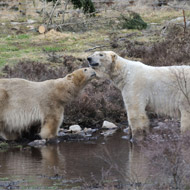
Arktos and Victoria will continue to live together for the next two weeks.
Keepers at RZSS Highland Wildlife Park say that polar bears Arktos and Victoria “have really warmed to each other” since their introduction.
Last Tuesday (15 March), Arktos - the oldest of the Park’s two male bears - was transported across the Park to a specially designed enclosure next to Victoria - the UK’s only female bear.
Keepers say that the bears took to each other immediately, with lots of head bopping, bouncing, and vocalisations.
On Saturday morning (19 March), the bears met properly for the first time as Arktos went to live in Victoria’s enclosure. Since then, mating has occurred twice and Arktos and Victoria will continue to live together for the next two weeks.
“It’s fantastic news and their introduction couldn’t have gone any better, “ said Vickie Larkin, head carnivore keeper at RZSS Highland Wildlife Park.
“Both polar bears have really warmed to each other and all the signs are really positive. From the first moment they met, Arktos has been really gentle with Victoria and their bond has been immediate.”
Polar bears are induced ovulators, meaning that the female only releases an egg after initial mating occurs. This complex process is made even harder by the fact that the species also practices delayed implantation. This is where the egg doesn’t implant into the uterine wall until some months later.
If successful, keepers say that Victoria will not fall pregnant until around August and could potentially give birth in December to January.
“Listed as Vulnerable on the IUCN Red List of endangered species, this is the first time in 25 years that polar bear breeding has successfully taken place on UK soil. This is something to be celebrated,” said Chris West, CEO of the Royal Zoological Society of Scotland.
“At RZSS we have a duty to help protect the future of this magnificent species, and our polar bears benefit from the largest enclosures in the world and expert husbandry that is second to none.
“Climate change is predicted to cause further sea-ice losses and horrifying statistics estimate that the global population of polar bears could decline by over 30% in just three generations*. Any cubs born to Victoria will help to populate a healthy ex-situ ‘ark’ of polar bears to give conservationists as many future options as possible.
“As we always say, in an ideal world, conservation would happen primarily in the wild but, when issues exist in the wild, the next best thing is a combined in-situ and ex-situ approach that has the goal of one day restoring or augmenting wild populations.”


 Companies marketing medicines for small pets exempt from authorisation must submit their annual return to the Veterinary Medicines Directorate (VMD) by 30 November 2026.



