


Government to replace horse racing betting Levy
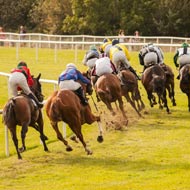
The British Horseracing Authority (BHA) have hailed the move as ‘truly historic’.
The Government has outlined its aim to replace the current horse racing betting Levy by April 2017.
Culture secretary John Whittingale said that Government would pool together income from betting both in shops and online.
The overhaul would see the racing industry receive a significant cash boost.
He said: "Our aim is to introduce a new funding arrangement for British racing by April 2017.
"We will create a level playing field for British-based and offshore gambling operators, and ensure a fair return from all bookmakers to racing, including those based offshore.
"Racing will be responsible for making decisions on spending the new fund and we'll be making further announcements shortly."
Welcoming the announcement, the British Horseracing Authority (BHA) have hailed the move as ‘truly historic’.
Chief executive Nick Rust said: “The new funding model will ensure a fair transfer of funding to British racing based on all betting activity on the sport - a link that was first established in law in 1961.
"It meets all of racing's requirements for a new funding model and can bear fruit in 2017, which is crucial given the significant Levy cliff we face.
"In the longer term, this means greater financial security for the sport, a platform for growth, a huge boost to our participants and more certainty for the tens of thousands of people who rely on racing for their livelihoods.
"We look forward to working with government on the details of these proposals and to make sure the implementation timetable they have announced today is achieved.”
The Association of British Bookmakers are keen to work with the government and the BHA, but stress that the new system ‘must be fair to betting shops’.
A statement read: "We welcome the government's progress on introducing a new system for the betting industry to fund horse racing.
"We will be working closely with the government and horse racing on the critical and so far undecided detail of the new system to ensure that any new Levy is both fair to horse racing and the betting industry.
"The amount that racing receives from betting, particularly in media payments has grown by tens of millions in recent years. On top of this, betting shops already bear an unfair burden and the current rate of 10.75 per cent is unsustainable for the retail sector.
"Any new deal on Levy has to be fair to betting shops and should be based on an accurate assessment of the level of subsidy required to support horse racing."


 Companies marketing medicines for small pets exempt from authorisation must submit their annual return to the Veterinary Medicines Directorate (VMD) by 30 November 2026.



