


Dutch animal circuses arrive in Ireland
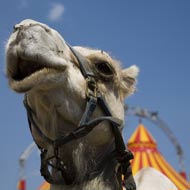
"Travelling circuses are no place for wild animals as they simply cannot provide a suitable environment for these animals." (stock photo)
Two Dutch animal circuses have arrived in Ireland after their home country, The Netherlands, introduced a ban on wild animals in circuses late last year.
Together, Circus Belly Wien and Circus Renz International comprise 65 animals including three elephants and three camels.
The news has dismayed welfare charities who warn that unless the government takes action, Ireland could attract more and more of these circuses as other EU countries ban them.
In response, the Irish Society for the Prevention of Cruelty to Animals (ISPCA) has called for an immediate ban on wild animals in circuses in a new campaign.
The charity is particularly concerned that these two circuses are using Asian elephants, which it says are one of the species least suited to life in a travelling circus.
Along with numerous other welfare organisations, ISPCA maintains that travelling circuses cannot meet the needs of complex animals such as elephants and tigers. The lifestyle goes hand-in-hand with frequent travelling, loading and unloading, handling, crowded conditions, noise, bright lights and limited social interaction - all of which are known to cause stress in wild animals.
England and Wales have committed to a ban on the use of wild animals in circuses, and Scotland recently held a public consultation on the issue.
ISPCA's CEO, Andrew Kelly, said: "Despite many countries having banned the use of wild animals in circuses on animal welfare or ethical grounds, Ireland still allows this out-of-date practice to continue.
"Travelling circuses are no place for wild animals as they simply cannot provide a suitable environment for these animals. Transported in cramped and barren 'beast-wagons' around the country, moving every few days and then forcing them to perform unnatural behaviours for human 'entertainment' should no longer be permissible in the 21st century. "
To find out more about the ISPCA's Big Stop campaign, visit: http://www.ispca.ie/the_big_stop_campaign


 Companies marketing medicines for small pets exempt from authorisation must submit their annual return to the Veterinary Medicines Directorate (VMD) by 30 November 2026.



