


Scientists uncover ancient chimp ‘Adam’
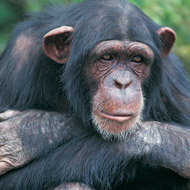
The genetic ‘Adam’ for chimpanzees lived an incredible one million years ago.
Researchers have identified a common ancestor - or genetic ‘Adam’ - among chimpanzees which lived over one million years ago.
In the study, published in the journal Genome Research, researchers show how the DNA sequences from the Y chromosomes of our nearest animal relatives (chimpanzees, bonobos, gorillas and originates) pass exclusively from fathers to sons.
The study also looked at mitochondrial DNA (mtDNA), passed from mothers to daughters in the same set of animals. This enabled the scientists to construct genealogical trees which helped them to discover that the genetic ‘Adam’ for chimpanzees lived an incredible one million years ago.
Lead author Dr Pille Hallast, from the University of Leicester’s department of genetics, explained: “The ancestor of a Y-chromosome family tree is sometimes called ‘Y-chromosomal Adam’. We can compare the ages of ‘Adams’ between the species. For humans the age is about 200 thousand years, while for gorillas it’s only about 100 thousand years. Thanks to two chimps in our sample, Tommy and Moritz, chimpanzees have an amazingly ancient ‘Adam’, who lived over 1 million years ago.
“The Y chromosome tree for gorillas is very shallow, which fits with the idea that very few male gorillas (alpha males) father the offspring within groups. By contrast, the trees in chimpanzees and bonobos are very deep, which fits with the idea that males and females mate with each other more indiscriminately.”
Project leader professor Mark Jobling, also from the University of Leicester’s Department of Genetics, added: “It’s interesting to compare the shapes of the trees between humans and our great-ape relatives. Considering both Y chromosome and mitochondrial DNA trees, humans look much more like gorillas than chimps.
“This suggests that over the long period of human evolution our choice of partners has not been a free-for-all, and that it’s likely that humans have practiced a polygynous system – where a few men have access to most of the women, and many men don’t have access - over our evolutionary history as a species. This is more like the gorilla system than the chimpanzee ‘multimale-multifemale’ mating system.”


 Companies marketing medicines for small pets exempt from authorisation must submit their annual return to the Veterinary Medicines Directorate (VMD) by 30 November 2026.



