


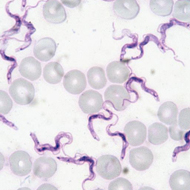
Further tests reveal widespread burden in local cattle
The first lab-confirmed case of Trypanosoma evansi infection has been reported in a previously healthy individual with no deficiencies.
Cattle and/or buffalo are thought to be the most likely source of infection, according to a report published in the journal Clinical and Infectious Diseases.
The patient, a 38-year-old woman with no Apolipoprotein L1 deficiency, presented at a southern Vietnam healthcare facility in March 2015 with fever, headache and joint pain.
Initial microscopic examination of blood revealed a trypanosoma infection and further PCR and serological testing identified T. evansi.
Although the patient relapsed six weeks after amphotericin B therapy, she made a complete recovery after five weeks of suramin.
Researchers say the infection was potentially contracted via a wound whilst the patient was butchering raw beef.
Responsive animal sampling in the presumed area of exposure uncovered a widespread, previously unidentified burden of T. evansi in local cattle. Nearly half (47%) of animal blood samples tested PCR positive for the infection.
The case highlights the possibility of further human cases and underlines the importance of surveillance for the infection in animals.
The full report can be found here: https://cid.oxfordjournals.org/content/early/2016/02/07/cid.ciw052.abstract
Image credit: Alan R Walker/ Wikimedia Commons/CC BY 3.0


 Companies marketing medicines for small pets exempt from authorisation must submit their annual return to the Veterinary Medicines Directorate (VMD) by 30 November 2026.



