


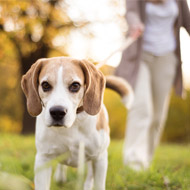
Two thirds of cattle attacks on people involve dogs
Researchers at the University of Liverpool are urging dog walkers to be vigilant in the countryside following a new study into cattle attacks.
Published in the journal Injury Prevention, the study shows that two thirds of cattle attacks on people involve dogs.
Media and hospital reports of cattle causing injury or death to members of the public have existed for some time. However, this is the first time that researchers have examined why these events occur.
“We found that walking with dogs among cows, particularly with calves present, was a common factor for an attack,” explains Dr Carri Westgarth, dog behaviour expert at the University of Liverpool.
“One theory for this is that the cows may feel particularly threatened by dogs, especially if they have young to protect People then try to protect their dogs, which can lead to a tragic incident occurring.”
In the study, researchers examined details of negative interactions between cattle and the public to identify risk factors for cattle attacks. They also sought to highlight the availability and usefulness of guidance on walking among livestock.
They found that between 1993 and 2013, the UK media reported a total of 54 cattle attacks on people. Of these, one in four were fatal and two-thirds involved dogs.
The review also found that injuries from cattle are a significant and under-reported public health risk.
Dr Marie McIntyre, who co-authored the review, commented: “There is currently no official system in place for reporting attacks, so it is highly likely that there have been far more than we know about. Further work is needed to fully assess the public health impact of this issue.”
With around 300,000 farms and 9.7 million cattle in the UK, it is not uncommon for people to come into contact with livestock while out walking their dogs.
Within the guidelines reviewed, advice on how to control dogs and behave around cattle were found to vary greatly.
Dr Westgarth added: “The countryside is a great place to exercise dogs, but it’s every owner’s duty to make sure that their dog is not a danger or nuisance to farm animals, wildlife or other people.
“Considering our findings, the best advice, if cattle approach, would be to let your dog off the lea, as then it can escape, and the cows are also likely to remove their focus from you.”


 Companies marketing medicines for small pets exempt from authorisation must submit their annual return to the Veterinary Medicines Directorate (VMD) by 30 November 2026.



