


BVA welcomes abolition of brucellosis pre-export testing
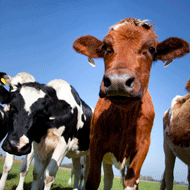
Pre-export testing for brucellosis in Northern Ireland will be abolished from February 2016.
News that pre-export testing for brucellosis in Northern Ireland will be abolished from February 2016 has been welcomed by the BVA.
The latest easing in restrictions follows the EU declaration in October 2015 that Northern Ireland is Officially Brucellosis Free (OBF) and means that breeding cattle over the age of 12 months will no longer require a pre-export brucellosis test.
Simon Doherty President of BVA Northern Ireland Branch said: “Today’s announcement is another important step forward in ridding Northern Ireland of brucellosis, and ongoing compliance with surveillance measures and biosecurity advice remains vital.
“Brucellosis testing will continue for the five years required, and we encourage farmers to fulfil their obligation to report any late-term abortion and deaths of calves within 24 hours of birth to their local DARD divisionary office. This continued vigilance, based on the precautionary principle, will facilitate appropriate follow-up and help ensure Northern Ireland remains Officially Brucellosis Free.”
Brucellosis is a highly contagious cattle disease that is characterised by abortions in cattle and can be transferred to humans with serious consequences for human health.
OBF status was granted in the Official Journal of the EU on 6 October 2015. It is almost four years since the last confirmed case of the disease, and over six years since the south obtained Officially Brucellosis Free (OBF) status. However, brucellosis testing must continue for five years after OBF status is granted to ensure continuing disease freedom and to meet trade requirements.
Announcing the news, agriculture minister Michelle O’Neill said: "The benefits of OBF status are now being reaped by farmers. We are in a position where the major savings for industry, taxpayers and DARD through the gradual dismantling of the brucellosis scheme are currently being appreciated."
Chief Veterinary Officer (CVO), Robert Huey, recommended the change and pointed out that industry’s ongoing compliance with surveillance measures and biosecurity advice was necessary.
He said: "The ending of pre-export testing to Britain and EU Member States is good news for farmers. However, while we are abolishing pre-export testing and have significantly reduced the levels of other routine testing, we must not relax our attitude to the reporting of abortions or any suspicion of brucellosis.
“It is very important that we continue to stay free of this devastating disease. Farmers should aim to achieve excellent biosecurity standards and so protect both human and animal health."


 Companies marketing medicines for small pets exempt from authorisation must submit their annual return to the Veterinary Medicines Directorate (VMD) by 30 November 2026.



