


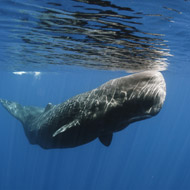
Experts were called on from across Europe
Veterinary experts from SRUC’s Scottish Marine Stranding Scheme (SMASS) have joined an investigation into one of the largest mass standings of sperm whales ever seen in Europe.
Dr Andrew Brownlow and his team spent several days last week supporting the investigation, which is looking into how 12 whales became stranded on the Wadden Islands - a collection of islands off the coast of the Netherlands, Germany and Denmark.
The Dutch-led team carried out post-mortems on most of the stranded animals, with Lonneke IJsseldijk from the University of Utrecht leading the investigation.
“This is the first sperm whale stranding that has been investigated in any detail and pulling together a team to carry out the post-mortems has been a huge logistical undertaking for IJsseldijk,” commented Dr Brownlow.
“Experts were called upon from across Europe and as a result we were able to post mortem five out of six animals within 48 hours of them stranding. This enabled an unprecedented amount of detail to be gained which, in turn, helps our understanding of the processes involved in their demise."
Andrew explained why it is essential that post-mortems are carried out quickly.
“Sperm whale are perhaps the most difficult of all marine species to examine, given their size, tough, fibrous blubber and the short time before they start to decompose as you can actually run the risk of exploding the carcase. Each animal probably weighed about 20,000kg and this requires heavy lifting machinery to even begin to examine the internal organs.”
“To properly investigate this number of animals it requires significant experienced manpower deployed very quickly, so this was the reason SMASS were asked if we could help.”
Dr Brownlow says that the final results are pending and will be released shortly. However, the team have been able to rule out many potential causes for the stranding.
“These animals were in good body condition but in the process of stranding became crushed under their own weight, which sadly led to their death. We took samples which will be analysed and for their diet, life history and contaminant burden which will also help us understand what may have happened to these whales.”
Image (C) Amila Tennakoon


 Companies marketing medicines for small pets exempt from authorisation must submit their annual return to the Veterinary Medicines Directorate (VMD) by 30 November 2026.



