
Your data on MRCVSonline
The nature of the services provided by Vision Media means that we might obtain certain information about you.
Please read our Data Protection and Privacy Policy for details.

In addition, (with your consent) some parts of our website may store a 'cookie' in your browser for the purposes of
functionality or performance monitoring.
Click here to manage your settings.
If you would like to forward this story on to a friend, simply fill in the form below and click send.

Your friend's email:
Your email:
Your name:
 
 
Send Cancel

Pigs running wild in Hong Kong
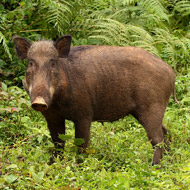
Wild boar
Wild boars are the largest land mammal in Hong Kong.

Driven to the city by development and construction
 
Police in China spent over three hours last week attempting to catch a wild boar which found itself lost in the financial district of Hong Kong.

Footage of the chase was captured on film by Periscope user @Penguinsix, who added to the suspense by humming the Mission Impossible theme tune.

It is the second time that a wild boar has been spotted in the city in two weeks, with the first sighted outside a luxury hotel.

Wildlife experts are blaming the recent incidents on development projects and construction around country parks.

Dr Gary Ades, head of fauna conservation at the Kadoorie Farm and Botanic Garden, told the South China Morning Post that "boars hate change and often panic when their environment changes."

Wild boars are the largest land mammal in Hong Kong, with adults measuring up to two meters long and weighing up to 200kg .

Over the last few years, the animals have been spotted throughout the city in theme parks, shopping malls and private housing estates.

"They're very funny animals," said Gary. "Whenever there is change [in their environment] they just don't want to be there.

"They create these beautiful animal highways in the dirt, which they use to get around, but a moment a new tree is planted there is confusion."

Wildlife experts say that regular feeding by humans (which is illegal), predation by feral dogs, and even the weather may also be driving the pigs into the city.

Drier winters make it difficult for pigs to get to the worms they usually feed on from the ground. 

Image (C) PJeganathan/Wikimedia

Become a member or log in to add this story to your CPD history

Equine Disease Surveillance report released for Q4 2025

News Story 1
 The latest Equine Disease Surveillance report has been released, with details on equine disease from Q4 of 2025.

The report, produced by Equine Infectious Disease Surveillance, includes advice on rule changes for equine influenza vaccination.

Statistics and maps detail recent outbreaks of equine herpes virus, equine influenza, equine strangles and equine grass sickness. A series of laboratory reports provides data on virology, bacteriology, parasitology and toxicosis.

This issue also features a case study of orthoflavivus-associated neurological disease in a horse in the UK. 

Click here for more...
News Shorts
RCVS annual renewal fee for vets due

RCVS' annual renewal fee for veterinary surgeons is now due. Vets must pay their renewal fee before Wednesday, 1 April 2026.

This year's standard annual fee has increased to 431 from last year's 418. This is an approximately three per cent increase, as approved by RCVS Council and the Privy Council.

Tshidi Gardner, RCVS treasurer, said: "The small fee increase will be used to help deliver both our everyday activities and our new ambitious Strategic Plan, which includes aims such as achieving new legislation, reviewing the Codes of Professional Conduct and supporting guidance, and continuing to support the professions through activities such as the Mind Matters Initiative, RCVS Academy and career development."

A full breakdown of the new fees is on the RCVS website. Information about tax relief is available on the UK government website.

