


Equine vet launches hard hat campaign
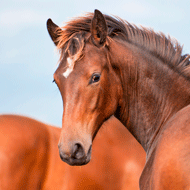
Equine vets receive more injuries during their working life than any other civilian profession, yet the use of helmets is said to be rare.
A new campaign is urging equine vets to wear protective helmets as part of a drive to cut down the number of accidents and deaths in the profession.
Equine vets receive more injuries during their working life than any other civilian profession - even more than those working in the prison service and the fire brigade.
A survey by the BEVA in 2014 found that vets sustain an average of seven to eight serious injuries over a 30-year working life.
Dr Jill Butterworth was surprised to find that wearing a protective helmet was not common practice among equine vets when she was studying at the RVC around 20 years ago.
By launching Think Ahead, she hopes to encourage the routine use of helmets. The campaign was set up after the death of Irish horse vet Gerry Long, following a kick to the head. A friend of Dr Butterworth's daughter was also seriously injured in a similar way.
In an essay submitted for a Vet Futures competition, Dr Butterworth outlines a number of possible reasons that vets may not wear helmets, including a reluctance to show fear or admit there is a risk, as well as vanity and peer pressure.
Younger generations of vets and nurses are more likely to be affected by the latter, which is something she hopes to tackle by making the use of helmets "practical and attractive".
Dr Butterworth added that she would like to see images of equine vets and nurses wearing hard hats in general use, to help permeate the veterinary consciousness. Through her campaign, she hopes to improve the accident survival statistics by 2030.
To find out more, visit: http://www.thinkaheadcampaign.org/


 Companies marketing medicines for small pets exempt from authorisation must submit their annual return to the Veterinary Medicines Directorate (VMD) by 30 November 2026.



