


Ropes likely to be be from abandoned fishing gear
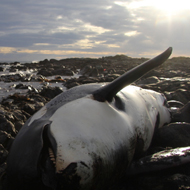
A stranded killer whale found off the west coast of Scotland is believed to have died as a result of rope entanglement, vets from Scotland's Rural College believe.
A post mortem carried out by Dr Andrew Brownlow and his team found that the ropes were likely to be either active or abandoned fishing gear or creel lines.
The adult orca, affectionately named 'Lulu', belonged to the only pod of resident killer whales in the UK, living off the coast of Tiree in Scotland. This small population, dubbed the 'West Coast Community' consists of nine whales which never interact with the migratory pods and never has a calf been recorded within the group.
The team say that this is the first killer whale which they have seen entangled. However, there seems to be an increase in the number of entanglement cases in other large cetaceans over the past year.
Commenting on the likely cause of Lulu's death, Dr Brownlow said: "We found convincing evidence that she had become chronically entangled and this was the most likely cause of her death. The deep wounds and abrasions we observed are consistent with 10-15mm rope, likely still attached to gear of some sort, wrapping around the tail and dragging behind the animal.
“Normal swimming and foraging would have been made very difficult and we suspect the animal had been entangled for several days. There was a lot of seawater in the stomach and we suspect she eventually drowned because of the entanglement. Although there were no ropes or fishing gear left on the carcase, the lesions are very similar to those we see from creel rope entanglement in baleen whales."
Dr Brownlow and his team will carry out further research and investigations on the animal, which should enable them to learn more about this poorly understood population.
“The samples we have recovered can tell us the orca’s age, whether she has ever been pregnant and possibly indicate any contaminant burden," he added.
Image (C) SRUC


 Companies marketing medicines for small pets exempt from authorisation must submit their annual return to the Veterinary Medicines Directorate (VMD) by 30 November 2026.



