
Your data on MRCVSonline
The nature of the services provided by Vision Media means that we might obtain certain information about you.
Please read our Data Protection and Privacy Policy for details.

In addition, (with your consent) some parts of our website may store a 'cookie' in your browser for the purposes of
functionality or performance monitoring.
Click here to manage your settings.
If you would like to forward this story on to a friend, simply fill in the form below and click send.

Your friend's email:
Your email:
Your name:
 
 
Send Cancel

Risk of magnesium deficiency, vets warn
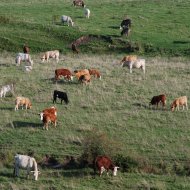
cows
"Although cattle are well designed to withstand very low temperatures, they are less well adapted to continuous rain which is what they have had to face over the last four to five weeks.

Extreme weather this winter could affect cattle

Farmers are being warned that extreme weather this winter could result in their cows suffering from magnesium deficiency.

Scotland's Rural College (SRUC) advises farmers with outwintered stock, especially cows, to make sure they receive a daily magnesium supplement.

The condition, often known as 'grass staggers', usually affects grazing cattle in spring, but overwintered cows fed on silage can also suffer.

"Magnesium is essential for metabolism and the requirement increases at times of stress," explains veterinary investigation officer George Caldow.

"Furthermore cattle rely on a steady intake of magnesium and heavy rainfall can interfere with the normal food intake of cows so that magnesium intake becomes critical."

On the whole, farmers have countered the recent extreme weather by making sure their dry, pregnant spring claviers are well fed with big bale silage. This is usually more than enough to meet the cow's energy requirements but can fail to meet their specific needs for some minerals and vitamins.

"Although cattle are well designed to withstand very low temperatures, they are less well adapted to continuous rain which is what they have had to face over the last four to five weeks," Mr Caldow adds.

"This continual drain on their heat reserves when coupled with a deficiency of magnesium can result magnesium tetany. While all producers are well aware of the risk of tetany to cows suckling calves at grass in the spring, it is not commonly expected in the middle of winter!

"Our advice is therefore for all producers with outwintered stock, particularly cows, to ensure they are adequately supplemented with a suitable magnesium supply daily."

 

Become a member or log in to add this story to your CPD history

Equine Disease Surveillance report released for Q4 2025

News Story 1
 The latest Equine Disease Surveillance report has been released, with details on equine disease from Q4 of 2025.

The report, produced by Equine Infectious Disease Surveillance, includes advice on rule changes for equine influenza vaccination.

Statistics and maps detail recent outbreaks of equine herpes virus, equine influenza, equine strangles and equine grass sickness. A series of laboratory reports provides data on virology, bacteriology, parasitology and toxicosis.

This issue also features a case study of orthoflavivus-associated neurological disease in a horse in the UK. 

Click here for more...
News Shorts
RCVS annual renewal fee for vets due

RCVS' annual renewal fee for veterinary surgeons is now due. Vets must pay their renewal fee before Wednesday, 1 April 2026.

This year's standard annual fee has increased to 431 from last year's 418. This is an approximately three per cent increase, as approved by RCVS Council and the Privy Council.

Tshidi Gardner, RCVS treasurer, said: "The small fee increase will be used to help deliver both our everyday activities and our new ambitious Strategic Plan, which includes aims such as achieving new legislation, reviewing the Codes of Professional Conduct and supporting guidance, and continuing to support the professions through activities such as the Mind Matters Initiative, RCVS Academy and career development."

A full breakdown of the new fees is on the RCVS website. Information about tax relief is available on the UK government website.

