
Your data on MRCVSonline
The nature of the services provided by Vision Media means that we might obtain certain information about you.
Please read our Data Protection and Privacy Policy for details.

In addition, (with your consent) some parts of our website may store a 'cookie' in your browser for the purposes of
functionality or performance monitoring.
Click here to manage your settings.
If you would like to forward this story on to a friend, simply fill in the form below and click send.

Your friend's email:
Your email:
Your name:
 
 
Send Cancel

Bluetongue: CVO issues warning about imports
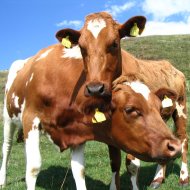
cows
Bluetongue is an insect-borne viral disease to which all ruminants are susceptible.
"Isolated incidents" of farmers importing susceptible cattle

Farmers in Northern Ireland are being urged not to import cattle from countries affected by bluetongue.

Chief veterinary officer Robert Huey says there have been "isolated incidents" in recent weeks of farmers importing cattle from affected European countries.

"There are inherent risks associated with this and I would urge farmers not to import cattle from affected countries," he warned.

Bluetongue is an insect-borne viral disease to which all ruminants are susceptible, but sheep are the most severely affected. The potential cost of an outbreak has been estimated at up to £25 million a year.

Mr Huey said: "Responsible sourcing of livestock is critical to the maintenance of our high animal health status and ability to trade.

"To date, the actions of DARD's Veterinary Service, alongside our counterparts in the south, in addition to the actions of responsible farmers, have been successful in maintaining bluetongue free status on the whole island of Ireland.

"It is vital that the necessary precautions are taken to ensure this status is retained."

Recently, there have been a number of cases of bluetongue serotype 8 (BTV-8) in the Allier region of central France. These outbreaks are the first to be reported in the EU since 2011. BTV-8 was responsible for the previous outbreak of bluetongue in northern Europe.

Become a member or log in to add this story to your CPD history

Equine Disease Surveillance report released for Q4 2025

News Story 1
 The latest Equine Disease Surveillance report has been released, with details on equine disease from Q4 of 2025.

The report, produced by Equine Infectious Disease Surveillance, includes advice on rule changes for equine influenza vaccination.

Statistics and maps detail recent outbreaks of equine herpes virus, equine influenza, equine strangles and equine grass sickness. A series of laboratory reports provides data on virology, bacteriology, parasitology and toxicosis.

This issue also features a case study of orthoflavivus-associated neurological disease in a horse in the UK. 

Click here for more...
News Shorts
RCVS annual renewal fee for vets due

RCVS' annual renewal fee for veterinary surgeons is now due. Vets must pay their renewal fee before Wednesday, 1 April 2026.

This year's standard annual fee has increased to 431 from last year's 418. This is an approximately three per cent increase, as approved by RCVS Council and the Privy Council.

Tshidi Gardner, RCVS treasurer, said: "The small fee increase will be used to help deliver both our everyday activities and our new ambitious Strategic Plan, which includes aims such as achieving new legislation, reviewing the Codes of Professional Conduct and supporting guidance, and continuing to support the professions through activities such as the Mind Matters Initiative, RCVS Academy and career development."

A full breakdown of the new fees is on the RCVS website. Information about tax relief is available on the UK government website.

