


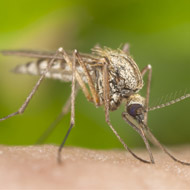
Technology may have potential to help control diseases and pests
The House of Lords are calling on the Government to launch a field trial of genetically modified (GM) insects and make the most of the UK's status as a world leader in this area.
The technology is believed to have the potential to help control diseases such as dengue and malaria, by rendering insects unable to transmit disease. This could potentially help almost half of the global population, who live in at-risk areas.
It is thought that GM technology could also reduce insect populations to minimise their threat to animals and crops, saving the world billions of pounds in the process.
The call follows the publication of a report by the House of Lords Science and Technology Committee into Genetically Modified insects. In it, they state that GM insects have considerable potential to control insect-borne disease and agricultural pests, but they are no 'silver bullet'.
The report describes how the UK, a world leader in this area of research, could reap significant economic benefits. However, it says that EU regulation is 'failing lamentably'.
Commenting on the report, the Earl of Selborne, chairman of the House of Lords Science and Technology Committee, explains:
"GM insect technologies have the potential not only to save countless lives worldwide, but also to generate significant economic benefits for UK plc, where we are an acknowledged world leader. But the development of GM insect technologies has come to a screeching halt because the EU regulatory system is woefully inadequate. Until we can get a regulatory framework that will do justice to this area of scientific research, its wings are effectively clipped.
"Our report concludes that the UK Government has a moral duty to test the potential of this technology, for the long-term benefit of those countries where diseases like dengue and malaria are indiscriminate killers. So as a first step towards that goal, we urge the Government to initiate field trials to put not only the science but, crucially, the regulations to the test. This trial could also be a focus to increase public engagement in the area."


 Companies marketing medicines for small pets exempt from authorisation must submit their annual return to the Veterinary Medicines Directorate (VMD) by 30 November 2026.



