


Badger culls to continue in 2016
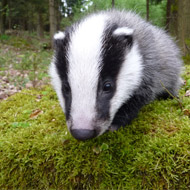
The government wants to see badger controls over a wider number of areas next year.
The badger culls will continue next year, alongside stricter cattle controls, as part of the ongoing bovine tuberculosis (bTB) eradication programme in England, Defra has announced.
Environment secretary Elizabeth Truss has confirmed that the comprehensive strategy to eradicate bovine TB in England "is delivering results," with over half the country on track to be officially free of the disease by 2020.
In a statement, Defra said that badger control operations in Somerset, Gloucestershire and Dorset were all successful in meeting their targets.
Chief Vet Nigel Gibbens added that the results showed industry-led badger control could deliver the level of effectiveness required to be confident of achieving disease control benefits.
As part of its strategy, the government wants to see badger controls over a wider number of areas next year.
Furthermore, to improve cattle movement controls, the Government plans to introduce statutory post-movement testing for cattle entering the Low Risk Area.
Responding to the announcement, BVA president Sean Wensley said that while the BVA continues to support targeted, effective and human badger culling, the organisation "remains disappointed that Defra plans to continue using controlled shooting and roll it out to new areas."
The BVA urges the Government to reconsider the policy and extend badger culling using cage trapping and shooting only.
Defra's plans to extend the badger cull is accompanied by changes to the licence conditions for groups of farmers carrying out the policy.
Raising BVA"s concerns about this, Mr Wensley said: "It is disappointing that the revised guidance to Natural England is not clearer that a simultaneous and intensive culling operation is the primary goal and does not define this. The primary goal must be to cull as many badgers as possible in as short a time as possible, in order to minimise the possible risk of perturbation."
Mr Wensley welcomed the strengthening of some of the tools needed to eradicate bTB, including the campaign to step up biosecurity measures in farms.
However, he said that the BVA was "disappointed to lose the BCG vaccine from the toolbox, with the temporary suspension of the Badger Edge Vaccination Scheme (BEVS)".


 Companies marketing medicines for small pets exempt from authorisation must submit their annual return to the Veterinary Medicines Directorate (VMD) by 30 November 2026.



