


UK's butterflies in 40-year slump
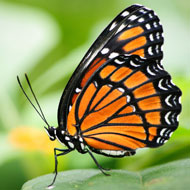
Some formerly common and widespread butterfly species are now a cause for concern.
A major scientific study has revealed that over three-quarters of the UK's butterflies have suffered declines in the past 40 years.
The State of the UK's Butterflies 2015 report shows that 76 per cent of resident and regular migrant species have declined in abundance, occurrence or both.
Commenting on these somewhat bleak findings, TV presenter and naturalist Chris Packham, said: "Yet again we are presented with sobering evidence that our much-cherished wildlife is in dire straits.
"As a society we are guilty of standing idly by as once common species, never mind the rarities, suffer staggering declines. This is a situation that should shame us all."
The report, released by Butterfly Conservation and the Centre for Ecology and Hydrology, shows that some formerly common and widespread species are now a cause for concern.
Wall butterflies, for example, were once a common farmland butterfly across southern Britain. But since 2005, they have suffered a 36 per cent fall in occurrence and a 25 per cent drop in abundance.
The gatekeeper, previously one of the country's most abundant species, has suffered a staggering 44 per cent decline in abundance over the past 10 years.
Loss of suitable habitats due to agricultural intensification and changing woodland management are seen as key causes of these declines in butterflies that are habitat specialists.
Declines in the wider countryside are not so well understood but it is believed that pesticides and climate change may be playing a larger role than previously thought.
Despite this, Chris Packham says the future of the UK's butterflies "does not have to be bleak" as the report also shows conservation work can change the fortunes of our most at-risk butterflies.
In the past decade, the number of Duke of Burgandy butterflies has risen by 67 per cent, while the pearl-bordered fritillary has seen a 45 per cent boost in its abundance.
Dinghy skipper and silver-studded blue have also seen a revival, rising in occurrence by 21 per cent and 19 per cent respectively. Even the UK's most endangered butterfly, the high brown fritillary, has remained fairly stable in the last 10 years.


 Companies marketing medicines for small pets exempt from authorisation must submit their annual return to the Veterinary Medicines Directorate (VMD) by 30 November 2026.



