


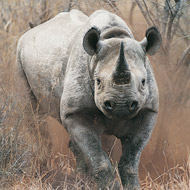
Born Free warn decision may hasten rhino's extinction
A high-court verdict to overturn a domestic ban on rhino trade has been reached in South Africa. The announcement has prompted a warning from the Born Free Foundation that it could put the world's rhino at even greater risk.
The decision was instigated following a petition from two prominent game farmers who claimed that the ban had fuelled the escalation of rhino poaching, which in turn was making their rhino stock uneconomic to maintain.
Commenting on the decision, Born Free Foundation's president Will Travers OBE, said: “Rhinos are threatened by poaching for their horns across their remaining African and Asian range. South Africa has the majority of the world’s rhinos, but by no means all.
"Legalising trade in rhino horn, at either a domestic or an international level, sends a message to consumers that rhino horn is a legitimate product - and will inevitably lead to increased demand, incentivising further poaching. Trading in horn will not save rhinos – it could hasten their extinction.”
In South Africa, rhinos are traded between government-operated National Parks, where around a third of the country's estimated 21,000 white and black rhinos live, and private game farmers who own most of the remainder.
Many game farmers in the country have been calling for their Government to propose a legal mechanism to allow international trade in rhino horn. The stockpiles they would sell would be obtained from natural mortalilities or through dehorning operations designed to protect the animals from poachers. The money would then be used to pay for their ranching programmes.
Last year alone, over 1,200 rhinos were killed by poachers in South Africa and the estimate for 2015 is expected to exceed that number.
Born Free warn that if this epidemic continues, there are fears that rhinos could become extinct across much of their remaining range. Legalising the market, the organisation believes, will not help to solve the problem, and may well accelerate poaching.
Mr Travers added: “South Africa does not exist in isolation, and the decisions it makes will have repercussions in other rhino range countries in Africa and Asia which are struggling to protect their remaining rhinos.
"Leading international economists and conservation experts agree that the markets for rhino horn are highly unpredictable, and that legalising the trade would be a huge risk, one that will be very difficult to reverse should it prove disastrous – as I predict it will.
"This decision, which seems to be based on the desire of private rhino owners to make a lot of money by selling their stocks of rhino horn, puts all of Africa and Asia’s remaining rhinos at even greater jeopardy. We urge the South African authorities to appeal the judgement and desist from any further efforts to legalise rhino horn trade.”


 Companies marketing medicines for small pets exempt from authorisation must submit their annual return to the Veterinary Medicines Directorate (VMD) by 30 November 2026.



