


Scientists create 'malaria resistant' mosquitos
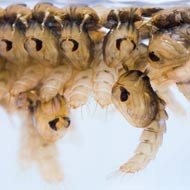
By using a gene editing tool called CRISPR, scientists were able to prevent malaria transmission being passed down to 99.5 per cent of offspring.
US scientists say they have managed to create a genetically modified mosquito that can block malaria infection, preventing its ability to transmit the disease to humans.
While further work is needed, the discovery could one day help to eradicate a disease that kills nearly a million people every year.
Scientists from the University of California (UC) inserted DNA into the germ line of Anopheles stephensi mosquitos - a leading malaria vector in Asia.
This prevented malaria transmission being passed on to 99.5 per cent of the insects' progeny, according to results published in the journal PNAS.
The UC team used a gene editing tool called CRISPR, which allows access to the cell nucleus to snip DNA for replacing mutated genes or inserting new ones.
"This is a significant first step," said Anthony James, a distinguished professor from UC's Irvine campus. "We know the gene works. The mosquitoes we created are not the final brand, but we know this technology allows us to efficiently create large populations."
Malaria is one of the world's leading health concerns, affecting 300-500 million people every year. Over 40 per cent of the world's population live in areas where there is a risk of contracting the disease.


 Companies marketing medicines for small pets exempt from authorisation must submit their annual return to the Veterinary Medicines Directorate (VMD) by 30 November 2026.



