


Pigeons identify cancerous tissue on x-rays
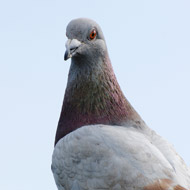
The pigeons were able to generalise what they learned, correctly identifying tumours in unseen microscope images.
Pigeons can identify cancerous tissue on x-rays, according to research published in the journal PLOS ONE.
The study, led by scientists at the University of California, proved that the birds have a remarkable ability to distinguish between cancerous and healthy breast tissue samples.
The pigeons were able to generalise what they learned, correctly identifying tumours in unseen microscope images. It is hoped that the finding could help improve new image-based diagnosis technologies.
Speaking to BBC News, lead author professor Richard Levenson said: "The birds were remarkably adept at discriminating between benign and malignant breast cancer slides."
Although a pigeon's brain is no larger than the size of a human finger, it has impressive capabilities.
Co-author professor Edward Wasserman from the University of Iowa explained: "Pigeons can distinguish identities and emotional expressions on human faces, letters of the alphabet, misshapen pharmaceutical capsules, and even paintings by Monet vs Picasso.
"Their visual memory capacity is equally impressive, with a proven recall of more than 1,800 images."
In the study, each bird was taught to differentiate between images of cancerous and non cancerous tissue, by being rewarded only when they provided the correct answer.
Not only did the birds learn to recognise tumours at a range of magnifications and image compression levels, but they also learned how to recognise tumours in the absence of colour.
The scientists say that the birds might be able to assist researchers and engineers in developing image-based cancer diagnostic tools which are tedious and expensive to produce.


 Companies marketing medicines for small pets exempt from authorisation must submit their annual return to the Veterinary Medicines Directorate (VMD) by 30 November 2026.



