


'Disturbing breach' of last resort antibiotics
Unless a globally coordinated approach is taken to combat the issue "MCR-1 is likely to spread to the rest of the world at an alarming rate."
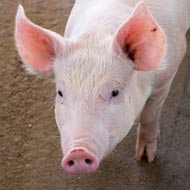
Bacteria that is resistant to our last line of antibiotics has been found in widespread samples taken from pigs and humans in southern China, scientists say.
Led by Professor Timothy Walsh from Cardiff University, scientists found a new gene (MCR-1) that allows bacteria to be highly resistant to polymyxins - our last group of antibiotics.
Prof Walsh said the emergence of this gene represents a "disturbing breach" of our last resort drugs "and an end to our last line of defence against infection".
The gene was found on plasmids - mobile DNA that can be copied and transferred easily between different bacterial populations, meaning it has an alarming potential to spread and diversify.
"Our investigations in China found that MCR-1 is already prevalent in E. coli samples found in live animals and meat products, and in a small number of human cases," Prof Walsh said.
Furthermore, there is now evidence to suggest MCR-1-positive E. coli has spread to Laos and Malaysia.
Prof Walsh is best known for his 2011 discovery of the NDM-1 antibiotic resistant superbug in New Delhi's drinking water supply.
Commenting on his latest research, he said: "The rapid spread of similar antibiotic-resistant genes such as NDM-1 suggests that all antibiotics will soon be futile in the face of previously treatable gram-negative bacterial infections such as E. coli and salmonella."
The potential for this to become a global issue will depend on the continued use of polymyxins, such as colistin, in animals, both in China and beyond; the ability of MCR-1 to spread through human strains of E. coli and movements across China's borders.
But unless a globally coordinated approach is taken to combat the issue, Prof Walsh warned "MCR-1 is likely to spread to the rest of the world at an alarming rate."
The full research has been published in The Lancet Infectious Diseases: http://www.thelancet.com/journals/laninf/article/PIIS1473-3099%2815%2900424-7/abstract


 Companies marketing medicines for small pets exempt from authorisation must submit their annual return to the Veterinary Medicines Directorate (VMD) by 30 November 2026.



