


Helping vets tackle challenging owner questions on feeding pets
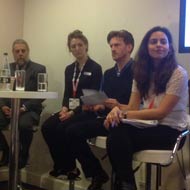
During question time, the audience had an opportunity to interact with the panel and to 'digivote' on various propositions.
Opening the seminar, PFMA chief executive, Michael Bellingham, said that the aim of the session was to take a look at pet foods in an objective way and to dispel some of the common myths associated with the feeding of companion animals, so that veterinary professionals can better advise their clients.
Sarah Hormazi from the PFMA outlined the role of the organisation, its function and responsibilities, especially for educating pet owners. Complementing this introduction, Laura Ward from GA Petfoods, took the audience through a typical manufacturing process.
Nick Thompson, from the Raw Feeding Vet Society, said that nutrition was the cornerstone of good clinical medicine. He outlined the typical criticisms of feeding raw meat diets but said that there was a lack of critical, scientific evidence. Much of the published information is from North America and may not be relevant to the situation in the UK.
He pointed out that there are now seven companies who are PFMA members, adhering to the FEDIAF guidelines and that this should provide reassurance to hesitant veterinary professionals.
Small animal nutrition consultant, Marge Chandler, emphasised the necessity for an evidence-based approach to nutrition. "Pet nutrition is like a religion to some people," she said. "The bottom line as far as I am concerned is whether the food is complete and balanced, suitable for a particular life stage and supported by randomised lifelong studies."
She emphasised the importance in clinical nutrition of looking closely at the needs of the patient and matching the diet to the actual needs of the individual. It is vital to check the credentials of the manufacturing company and to ensure that it is a member of a professional trade association, adhering to FEDIAF or AAFCO guidelines.
Concluding the presentations, small animal nutritionist John Lowe spoke about the needs of 'small furry' animals, especially rabbits and guinea pigs. He said that these species are still the "poor relations" in terms of nutritional knowledge and should not be "lumped together" nutritionally.
He said that there is now much more serious consideration of the nutritional requirements of the different species and much more appropriate foods being developed based on scientific studies, the application of human food textural science and acknowledgment of their natural feeding behaviour.
During question time, the audience had an opportunity to interact with the panel and to 'digivote' on various propositions. Almost three quarters of the audience felt that, when fed properly, commercial pet foods provide optimum nutrition.
Marge Chandler pointed out that in reality humans pay less attention to the nutritional balance of their own diet than they apply to pet nutrition. Many of us may be suffering from various subclinical nutritional deficiencies without realising it and our general knowledge about foods is poor. "If we humans want complete and balanced nutrition, then we might be better eating a complete dog food!" she said with her tongue placed slightly in her cheek.


 Eligible members of BEVA will be able to vote for their Council team until Monday, 17 August 2026. Members will have received an election email on 17 July.



