


'Alarming trend of decline' seen in dung beetles
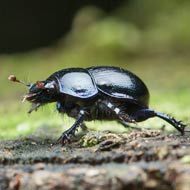
"Our results mapping the dung beetle species in the UK, although the project is in its youth, are already showing an alarming trend in species rarity and even extinction."
Scientists say they are seeing an "alarming" decline in some of the UK's dung beetle species.
The Dung Beetle UK Mapping Project (Dump) is being carried out by a team of researchers in their spare time.
They have been exploring well-known dung beetle areas, such as parts of the Cairngorms, as well as seeking the insects out in previously unrecorded places.
One of the team, Sally-Ann Spence, spoke to BBC News about the early findings: "Our results mapping the dung beetle species in the UK, although the project is in its youth, are already showing an alarming trend in species rarity and even extinction.
"The three main reasons behind this are considered to be the use of anthelmintics, soil disturbance and the disappearance of livestock from historic pastures due to a change in farming practices."
Dung beetles are estimated to save the UK's cattle industry £367 million a year, Ms Spence added.
They help to protect livestock by eating animal droppings that contain harmful parasites, as well as encouraging healthy grass to grow by burrowing in the soil, allowing rainwater and nutrients into the ground.
The team are also taking the opportunity to speak to farmers about dung beetles, their benefits and how they can help encourage a healthy population.
Ms Spence said the result has so far been "fantastically positive".
"Farmers are keen to preserve their dung beetles and we intend to gather more data about species and their population frequencies to enable more research into these incredibly important beetles."


 Companies marketing medicines for small pets exempt from authorisation must submit their annual return to the Veterinary Medicines Directorate (VMD) by 30 November 2026.



