


Majority of vets give up their time for charity
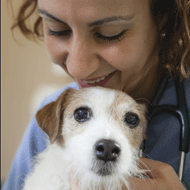
Two in five vets do unpaid work for animal welfare charities.
The majority of vets give up their time to work with animal charities and shelters, offering their veterinary expertise at a reduced rate, or even for free, according to a BVA survey.
Over 40 per cent of vets who took part in the survey said they do unpaid work for animal charities or other animal welfare organisations.
Just under three-quarters have formal arrangements in place with charities, to provide veterinary services at a reduced fee. This figure rose to 84 per cent when taking into account less formal set-ups.
The figures form part of the findings from BVA's Voice of the Veterinary Profession survey, which ran from September-October last year.
BVA president Sean Wensley commented: "Behind these statistics are countless stories of veterinary teams – who already often work long, demanding hours – giving their time for free to support animal rescue staff and charities to care for abandoned, injured and neglected animals, as well as help owners to keep and care for much loved animals in times of hardship and crisis."
Charity work undertaken varies from practice to practice but includes health checking, medicating and treating, neutering and vaccinating at animal shelters and rescue centres.
Many practices offer veterinary advice to homeless people and those in housing crisis, helping to care for dogs as part of the Dogs Trust Hope Project. Vets also support the Freedom Project which temporarily fosters animals for those fleeing domestic violence.
Other activities include teaming up with charities to neuter cats and dogs belonging to people on limited incomes. Last year vets helped to neuter 158,000 cats and kittens for Cats Protection alone.
More than 300 practices also carry out work for the PDSA, providing treatment for animals belonging to those on means-tested benefits.
Last but not least, vets play an essential role via the initial emergency treatment (IET) scheme, providing treatment for un-owned or wild animals.


 Companies marketing medicines for small pets exempt from authorisation must submit their annual return to the Veterinary Medicines Directorate (VMD) by 30 November 2026.



