


Take care when building bonfires
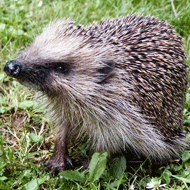
Piles of leaves and unlit bonfires can be ideal places for sleepy hedgehogs looking for somewhere to bed down for the winter.
The Born Free Foundation are reminding the public to be on the lookout for hedgehogs this autumn, as one of the UK's most endangered species prepares to hibernate.
Hedgehog populations are shrinking fast. Research by the People's Trust for Endangered Species shows that there has been a 30 per cent drop in numbers in the last 10 years and suggests that there are now less than one million hedgehogs left in the UK.
Earlier this week, Tarnya Knight from the Born Free Foundation appealed for people to be mindful in the lead up to Bonfire Night, as piles of leaves and unlit bonfires can be ideal places for sleepy hedgehogs looking for somewhere to bed down for the winter.
She says: "Many hedgehogs die or suffer terrible injuries every year because bonfire piles are not checked before being lit. However, there are a number of steps we can all take to prevent such incidents from happening."
Born Free's tips for a hedgehog-friendly bonfire include:
• Build your bonfire on the day it will be lit, putting the pile of material next to the bonfire site and rebuilding before lighting it if necessary.
• Make sure that you build the bonfire on clear ground, never on top of a pile of leaves or near to a pampas grass – both are good hiding places for hedgehogs.
• If you are unable build the fire on the day of lighting, use a broom handle to check the bonfire by gently lifting section by section and using a torch to look for hedgehogs, whilst listening for any movement.
• If a large bonfire has to be built in advance, prevent hedgehogs from getting in by putting chicken wire one metre high all the way around the bottom. This should be held in place with stakes and the wire should slope outwards at an angle to make it difficult to climb, as hedgehogs are good climbers!
Tarnya adds: “We’re asking people to be especially vigilant for the next few weeks and take care when building their bonfires. If you do find a hedgehog in your unlit bonfire, place it in a box with some leaves or shredded paper, with some water and meaty cat or dog food, and place it in a shed where it can be left in the quiet until the fireworks have finished and the bonfire dampened down.”


 Companies marketing medicines for small pets exempt from authorisation must submit their annual return to the Veterinary Medicines Directorate (VMD) by 30 November 2026.



