


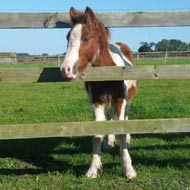
Huckleberry now undergoing rehabilitation
A young horse left to graze illegally on private land has been rescued thanks to the new Control of Horses Act, which was introduced to crack down on fly-grazing.
The foal, which has been named Huckleberry, was initially found tethered in the Red Lodge area of Suffolk, along with another horse.
Before any action could be taken, however, the pair disappeared and were later traced to an old rubbish tip - by which time, sadly, Huckleberry's companion had died.
Working together, the RSPCA, Suffolk Police and World Horse Welfare advised the landowner that Huckleberry could be removed under the Control of Horses Act (2015).
The act - which came into force in May this year - gives landowners and local authorities more powers to remove horses being fly-grazed without permission.
Ownership now passes to the landowner after just four days, rather than two weeks. There are also more options for the horse besides public sale - for example, they can be gifted to a charity, sold privately or humanely euthanised.
World Horse Welfare officer Jacko Jackson said: "Huckleberry’s case is an important demonstration of how effective the Control of Horses Act can be in helping quickly remove vulnerable horses to a safe and secure place where they can be given the care they need."
The young horse was initially transported to World Horse Welfare's Hall Farm Rescue and Rehoming Centre. After four days, the landowner signed him over to the charity and he is now undergoing rehabilitation.
"Given the tragic fate of his companion, Huckleberry was clearly at risk," Jacko Jackson added. "The Control of Horses Act gave the landowner the necessary power to take swift action, which would have been a significantly longer process without the act in place.
"Huckleberry can now undergo rehabilitation and join World Horse Welfare’s rehoming scheme once he is ready, giving him a bright future despite his difficult start in life."
Image courtesy of World Horse Welfare


 Companies marketing medicines for small pets exempt from authorisation must submit their annual return to the Veterinary Medicines Directorate (VMD) by 30 November 2026.



