


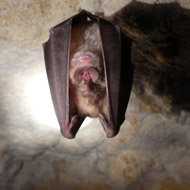
Lottery boost for Devon Greater Horseshoe Bats
A rare bat project has been awarded over £700,000 of National Lottery funding to help secure the long-term future of one of the rarest animals in northern Europe.
The Devon Greater Horseshoe Bat Project, led by the conservation charity Devon Wildlife Trust, received a grant of £707,000 via the Heritage Lottery Fund to restore habitats and protect 11 "priority roosts".
Project manager Ed Parr Ferris told the University of Exeter: “We’re delighted to have gained this generous support from the Heritage Lottery Fund. The greater horseshoe bat is a species that has seen its European population crash in the last 100 years, and has disappeared from more than half its British range."
Greater horseshoes are one of the UK’s biggest bats with a wingspan of almost 40cm. Once common across southern England, changes in land-use and a move away from cattle-grazed pastures and hay meadows has led to their loss from much of the countryside.
The project’s ultimate goal is to restore the landscapes that the bats need to travel through and feed in. Working alongside farmers and local communities, it will provide advice and assistance to manage, restore and create the networks of habitats this species needs.
Ed Parr Ferris said: “Cattle-grazed pastures, wildflower-rich meadows, hedges, woodland edges, orchards and streams all play a key part in the bat’s complex lives. They use these landscape features to navigate and travel safely and as hunting grounds to find their favourite prey: moths and beetles.
"The project will work with local farmers and communities to improve and conserve these features. This will be to the benefit not only of greater horseshoe bats but also Devon’s wealth of other wildlife and our treasured landscapes.”
The 11 priority areas are in the Avon Valley, Berry Head, Branscombe, Braunton, Bovey Tracey, Buckfastleigh, Chudleigh, Tamar Vallet, Dartmouth Harbertonford and Southleigh.
Anyone living close to one of the areas and who wishes to help should contact the project’s community engagement officer, Helen Parr on 01392 279244 or by email on hparr@devonwildlifetrust.org.
For more information visit www.devonbatproject.org
Image (C) Wikimedia Commons/


 Companies marketing medicines for small pets exempt from authorisation must submit their annual return to the Veterinary Medicines Directorate (VMD) by 30 November 2026.



