


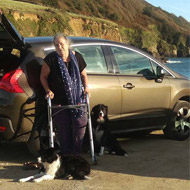
Jan Collins lost both her legs to necrotizing fasciitis
A veterinary nurse who lost both her legs following life saving-surgery has finally received her specially adapted car, with the help of the fundraising efforts of colleagues at St Johns Veterinary Practice in Berkhamstead.
Practice vet Beverley Irving said: "Last week Jan purchased an estate car after she had, hopefully, her final surgery to remove the filter from her vena cava.
"She's had her assessment for driving and the car is being converted on Tuesday to hand controls."
Earlier this year, Jan Collins had to have both of her legs amputated after contracting a life-threatening infection following an operation. The veterinary nurse developed necrotizing fasciitis - more commonly known as the 'flesh eating disease' which can often become a fatal condition resulting in multi-organ failure.
The government's scheme to help disabled people become mobile again with hand controlled adapted cars is only available up until the age of 65. Sadly, Jan celebrated her 66th birthday just before the initial operation so was not eligible for any government help.
Veterinary nursing had been Jan's life and it was a big incentive to get better again. So, to help Jan get back to doing what she loved most, her colleagues launched an online fundraising campaign and set about raffling dog food and other items within the practice.
"With all of the generous donations we've managed to raise just under £7000 towards the 8500 needed for the car and £800 for the hand conversion," said Beverley.
"I still feel that we should have had some help from the government. Jan has worked and paid taxes all her life, is a widow, and despite all she's struggling with at the moment is already back at work doing as much as she can."
The practice is still working to try to raise the final amount so that Jan doesn't have to put anything towards the car herself. To make a donation please visit https://pledgie.com/campaigns/29396 .
Image (C) Jan Collins/Beverley Irving


 A nationwide roadshow offering free, personalised parasite risk assessments and flea and tick checks will be visiting popular dog events across the UK.



