


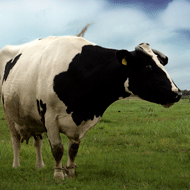
Names and addresses will not be published
The locations of farms in Wales infected with bovine tuberculosis (bTB) are set to be published online, the Welsh Government has announced.
In a statement, deputy farming minister Rebecca Evans said that the publication of the data would provide people with information on bovine herds infected with TB, allowing them to take appropriate precautions to protect their own herds from the spread of disease.
"It will also raise awareness of the risk of purchasing animals with hidden infection", she added. "I have taken this decision to support individual farm businesses and help them to minimise the risk of TB affecting their business."
Earlier this year, Rebecca Evans launched a consultation on proposed changes to the Tuberculosis (Wales) Order 2010 to allow the government to publish information on cattle herds infected with bovine TB.
There were over 33 responses to the consultation from industry representatives, stakeholder groups, wildlife organisations and individuals directly involved with the cattle industry in Wales.
While the majority (28) agreed with the proposal, there was opposition from the Farmers' Union of Wales (FUW) who had concerns over the release of personal information and the safety of the individuals that may be identified.
In response, the Welsh Government said that they would undertake a privacy impact assessment for each proposed use of the power, and that names or addressed would not be published.
The most popular suggestion for publishing the information was on a map on a government website. Neighbouring farmers would then recognise farms adjoining them without actually naming the owner of the cattle.
However, there was a disagreement on whether the information should be publicly available or restricted to farmers. Some respondents felt that there was a disease control benefit in allowing vets to access the information on the location of infected cattle.
The South East Wales Regional TB Eradication Delivery Board pointed out that it would also be important “for all vets to be able to access the maps as well. This would help with wider disease control programmes that farmers may discuss with their own vet.”
The Welsh Government say that plans to publish the information are now underway and a further statement will be made in November.
To read the full summary of responses to the consultation, visit http://gov.wales/consultations.


 Companies marketing medicines for small pets exempt from authorisation must submit their annual return to the Veterinary Medicines Directorate (VMD) by 30 November 2026.



