
Your data on MRCVSonline
The nature of the services provided by Vision Media means that we might obtain certain information about you.
Please read our Data Protection and Privacy Policy for details.

In addition, (with your consent) some parts of our website may store a 'cookie' in your browser for the purposes of
functionality or performance monitoring.
Click here to manage your settings.
If you would like to forward this story on to a friend, simply fill in the form below and click send.

Your friend's email:
Your email:
Your name:
 
 
Send Cancel

Pets may protect children from allergies, study finds
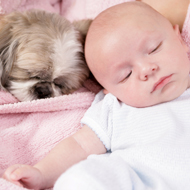
Dog and baby
Early exposure to animals could protect children against some allergies.
More research needed to assess the influence

People who share their homes with animals share some of their pet's gut bacteria, according to new research.

The study, published in the Journal of Allergy and Clinical Immunology, may explain why early exposure to animals could protect against some allergies.

Dr Merja Nermes from the University of Turku in Finland and co-author of the study said: "Earlier it was thought that exposure to pets in early childhood was a risk factor for developing allergic disease.

"Later epidemiological studies have given contradictory results and even suggested that early exposure to pets may be protective against allergies, though the mechanism of this protective effect have remained elusive."

She told news agency Reuters Health that adding pet microbes to the infant intestinal biome may strengthen the immune system.

Now she and her colleagues want to see exactly how exposure to pets might influence the immune systems of children.

"Future research is needed to assess if these infants develop less atopic dermatitis, asthma or allergic rhinitis later," she said.

She added that paediatricians should not advise parents to avoid having pets in the home for fear of allergies.

“If a family with a pregnant mother or an infant wants to have a pet, the family can be encouraged to have one, because the development of allergic disease cannot be prevented by avoiding pets," she explains.


Become a member or log in to add this story to your CPD history

Equine Disease Surveillance report released for Q4 2025

News Story 1
 The latest Equine Disease Surveillance report has been released, with details on equine disease from Q4 of 2025.

The report, produced by Equine Infectious Disease Surveillance, includes advice on rule changes for equine influenza vaccination.

Statistics and maps detail recent outbreaks of equine herpes virus, equine influenza, equine strangles and equine grass sickness. A series of laboratory reports provides data on virology, bacteriology, parasitology and toxicosis.

This issue also features a case study of orthoflavivus-associated neurological disease in a horse in the UK. 

Click here for more...
News Shorts
RCVS annual renewal fee for vets due

RCVS' annual renewal fee for veterinary surgeons is now due. Vets must pay their renewal fee before Wednesday, 1 April 2026.

This year's standard annual fee has increased to 431 from last year's 418. This is an approximately three per cent increase, as approved by RCVS Council and the Privy Council.

Tshidi Gardner, RCVS treasurer, said: "The small fee increase will be used to help deliver both our everyday activities and our new ambitious Strategic Plan, which includes aims such as achieving new legislation, reviewing the Codes of Professional Conduct and supporting guidance, and continuing to support the professions through activities such as the Mind Matters Initiative, RCVS Academy and career development."

A full breakdown of the new fees is on the RCVS website. Information about tax relief is available on the UK government website.

